Emergency Services · Updated · Published · 7 min read
Storm-Damaged Trees in Edmonton: What To Do After High Winds or Heavy Snow
How to assess storm damage on Edmonton trees, what to do safely, and when removal is the only option — guidance from ISA-certified arborists.

Table of Contents
High winds, heavy snow, and sudden temperature swings are part of life in Edmonton. When storms roll through, trees often take the hit including broken branches, split trunks, or even full tree failure.
If you're dealing with storm-damaged trees, here's what to do next and how to reduce the risk moving forward.
1. Put Safety First
Before inspecting any damage, make sure the area is safe.
- Stay clear of downed power lines and call EPCOR immediately if lines are involved.
- Keep family members and pets away from hanging or cracked limbs.
- Do not attempt to climb or remove large branches yourself.
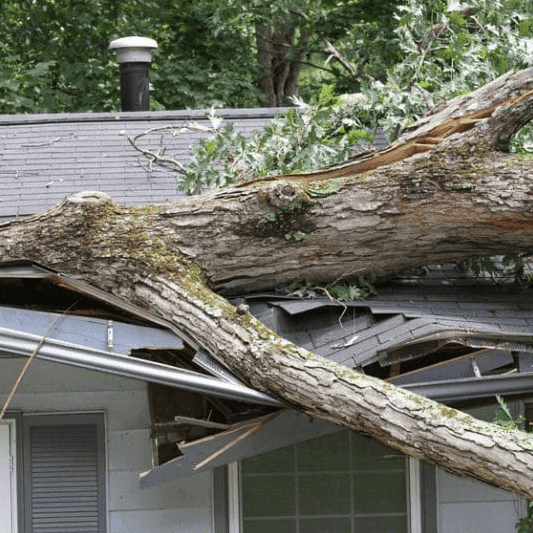
Storm-damaged trees can be unstable even if they look intact. What appears minor at first glance can involve hidden structural failure including loose branches high in the canopy that can shake free and fall without warning or sound.
2. Assess the Type of Damage
Once the immediate risk is controlled, look at the tree from a safe distance.
Common types of storm damage in Edmonton include:
- Broken or hanging limbs from wind gusts
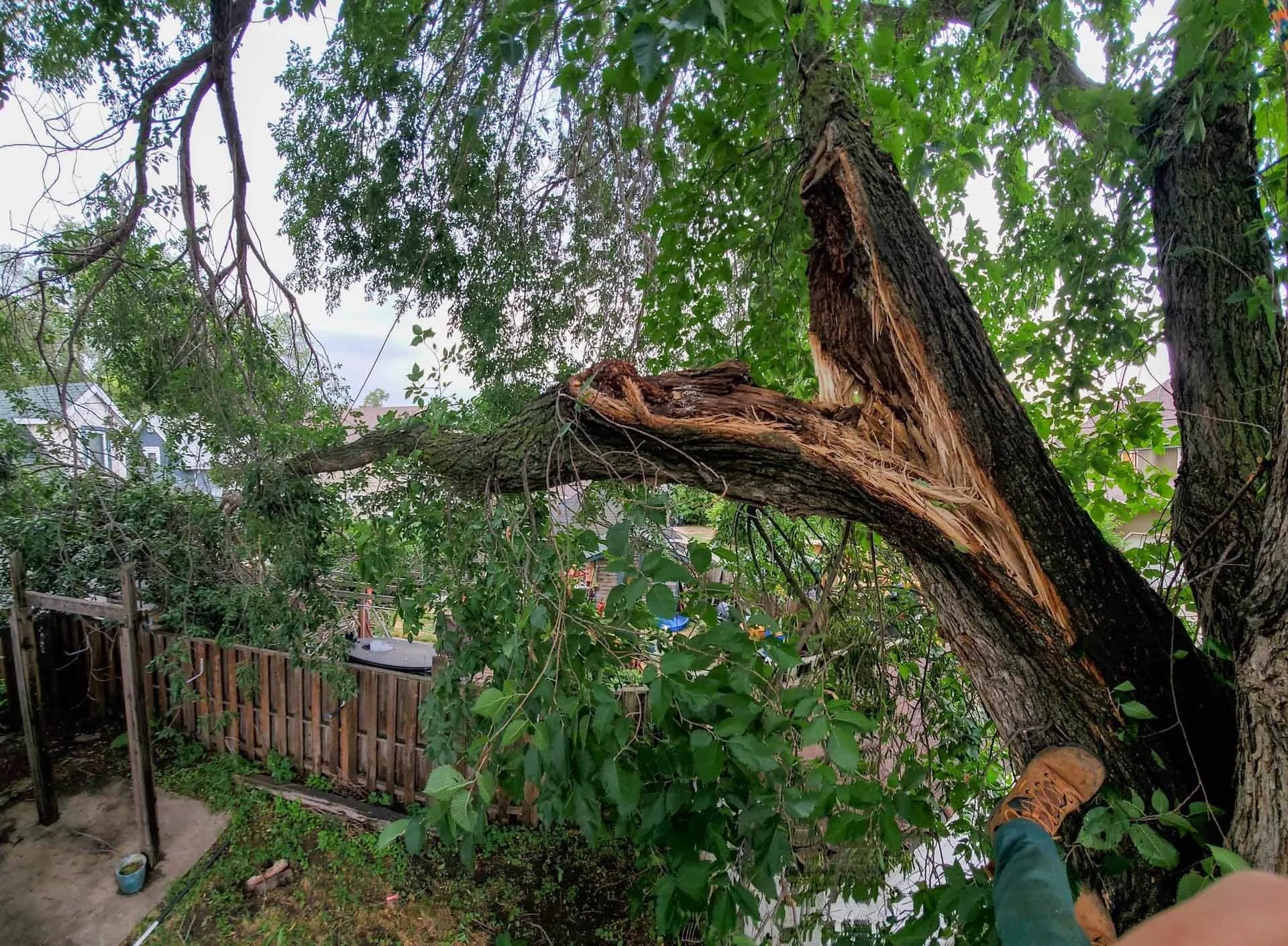
- Split trunks or co-dominant stem failure
- Uprooted trees due to saturated soil
- Heavy snow load damage (most common) especially during early fall or late spring when trees still have leaves and wet snow accumulates rapidly, dramatically increasing branch weight
Why Wet Canopies and Early Snow Cause Failures
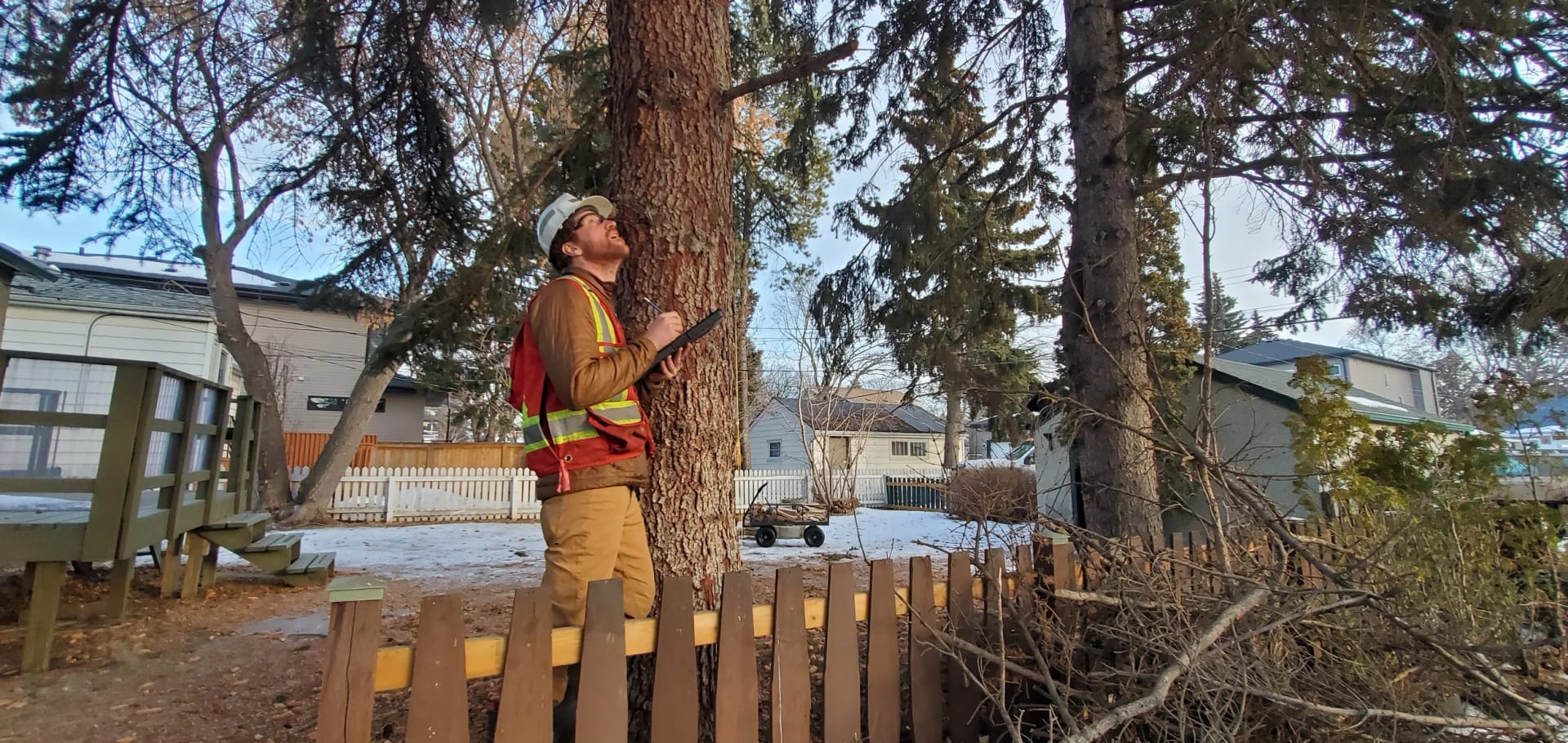
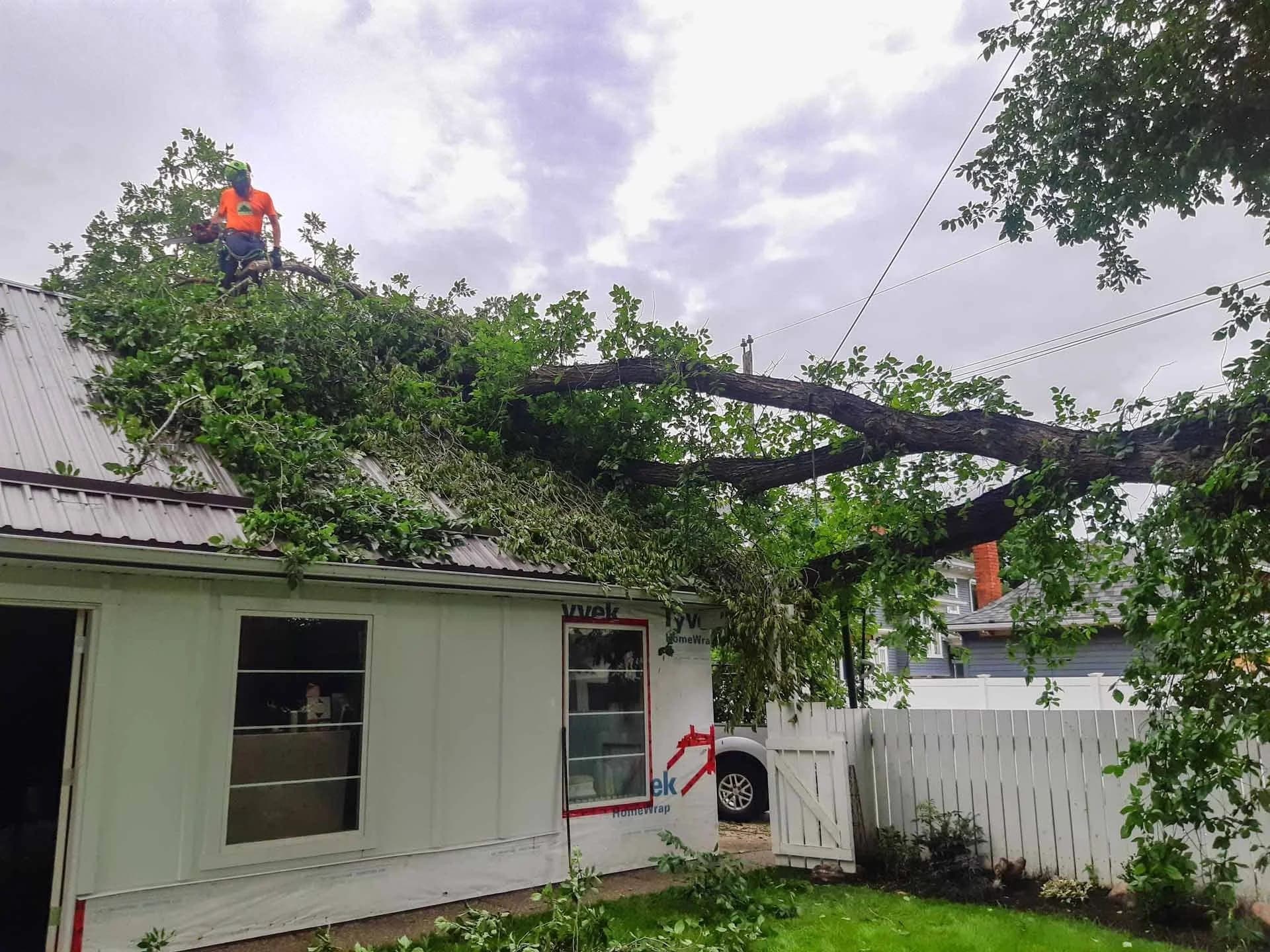
Inspecting structural integrity after heavy snow and wind in an Edmonton neighbourhood.
An important concept many homeowners don't consider is how much weight a tree carries during certain weather events.
When a canopy becomes saturated with rain, every leaf and branch is holding as much water as it physically can. The weight of each limb increases significantly. If strong winds hit while the canopy is fully saturated, the added weight combined with lateral force creates a recipe for structural failure.
Early or late heavy snow can have a similar effect, especially when trees still have leaves. Wet snow accumulates rapidly, loading branches beyond what they are structurally adapted to handle.
In Edmonton, soaking rain followed by wind, or early-season snow events, are among the most common weather-related causes of branch failure.
Not every damaged tree needs to be removed. In many cases, proper structural pruning can restore safety and long-term health.
An ISA-certified arborist can determine whether the tree can be preserved or if removal is the safest option.
3. Avoid Quick Fixes or Improper Pruning
After a storm, it's common to hear advice like "thin it out so the wind can pass through."
While this sounds logical, heavy thinning is not a proven strategy for reducing storm failure. In fact, excessive thinning can weaken tree structure. It's similar to driving on the highway with your car window open — instead of becoming more aerodynamic, the wind catches inside.
The only scientifically supported pruning method to reduce the risk of branch failure is reducing the height or length of structurally weak branches (crown reduction), not stripping out interior growth.
Proper corrective pruning after storm damage should:
- Remove broken or torn limbs cleanly
- Reduce stress on remaining structural branches
- Maintain the tree's natural form and balance
Done incorrectly, pruning can create more long-term risk than the storm itself.
4. Know When Removal Is Necessary
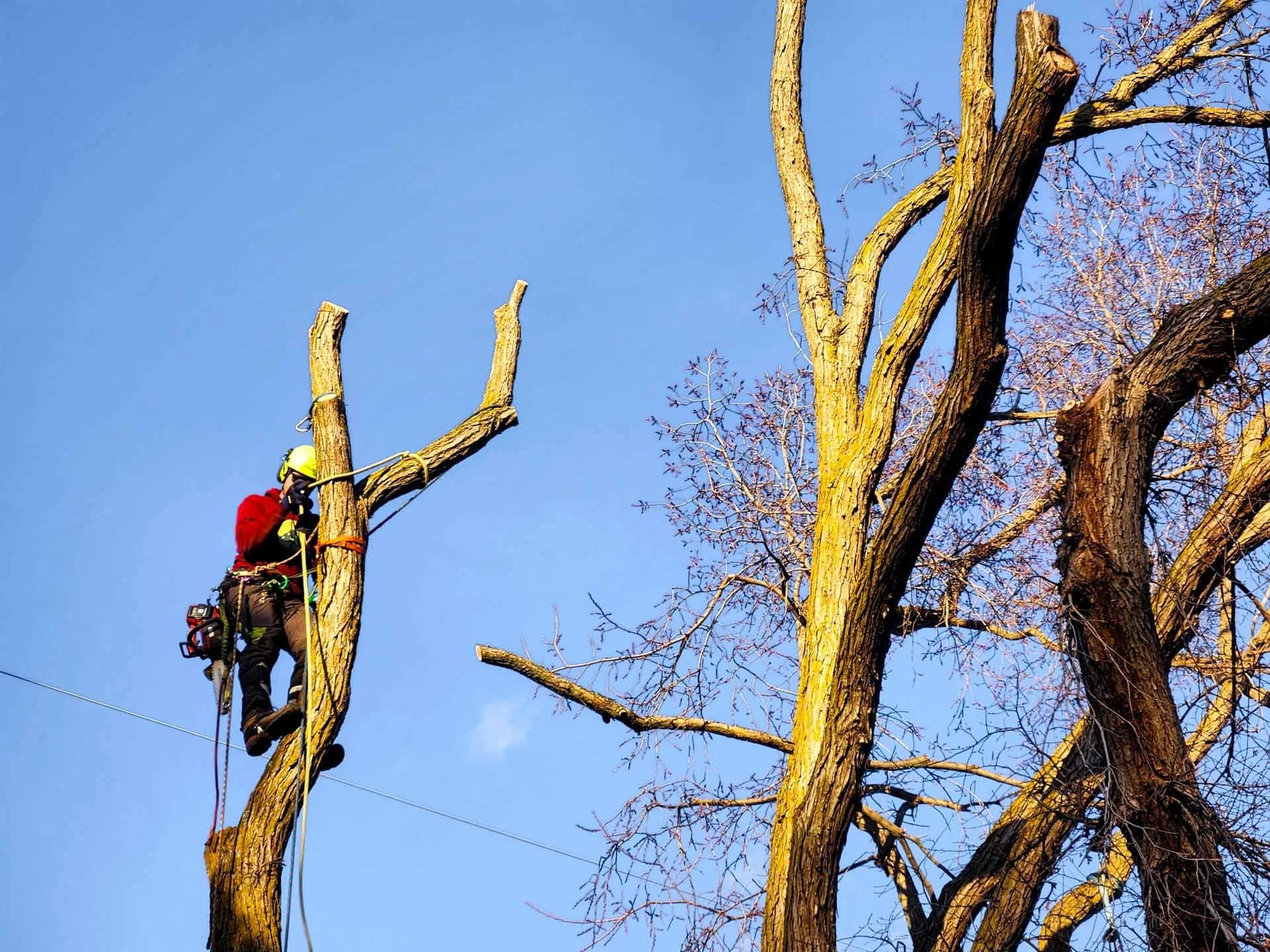
Safe removal of a structurally compromised tree in an Edmonton residential yard.
Sometimes, storm damage goes beyond repair.
Removal may be required if:
- The trunk is split deeply through the main stem
- The tree has uprooted and shifted significantly
- More than 50% of the canopy is lost
- The tree poses an immediate risk to a home, sidewalk, or roadway
Emergency tree services are often required in these cases, especially in central Edmonton neighbourhoods where trees grow close to homes and infrastructure.
5. Prevention Is Usually Cheaper Than Reaction
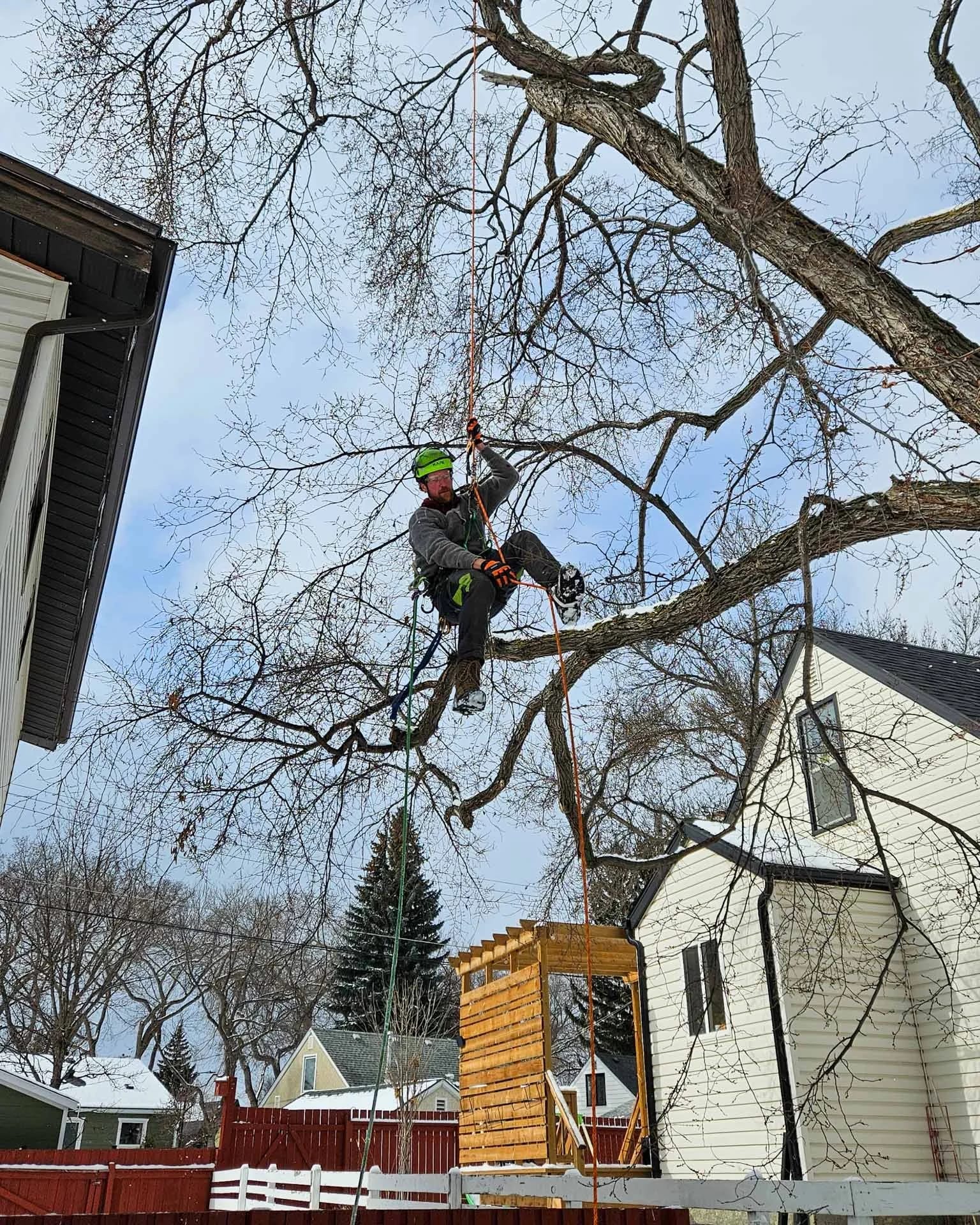
One of the most important takeaways after a storm is this: prevention is almost always more effective — and less costly — than reacting to damage.
Trees should be assessed periodically for structural integrity and overall health. Early intervention can significantly reduce the risk of failure during wind or heavy snow.
Structure is by far the most important factor in storm resilience. A knowledgeable arborist — especially one trained in Tree Risk Assessment — can often predict the most likely point of failure in a tree.
Failure is not random. It is structural and predictable.
The question becomes: if this tree fails, where will it fail?
- A branch?
- A co-dominant stem union?
- The main trunk?
- The root plate?
- Or the entire tree?
For example, a spruce tree with one dominant trunk from bottom to top is typically very strong. But if that trunk splits halfway up into two competing stems, the union where they meet becomes the weakest point in the structure — and the most likely location for failure.
Identifying these structural weaknesses early allows corrective pruning, cabling, or reduction before a storm exposes the problem.
Common mitigation strategies include:
- Crown reduction to decrease leverage on long, heavy limbs — especially important during saturated canopy events when branches are carrying significantly more weight
- Structural pruning in young trees to improve long-term strength
- Cabling and bracing systems for weak unions or co-dominant stems
- Ongoing health assessments to identify decay before it becomes a hazard
A proactive approach protects your property, preserves mature trees, and supports Edmonton's urban canopy.
When to Call a Professional Arborist
If you're unsure whether a tree is safe before or after a storm, it's worth having it assessed.
A qualified arborist can:
- Evaluate structural stability
- Identify hidden decay or internal cracking
- Recommend preservation options before removal
- Prescribe proactive pruning to reduce the risk of failure in a future storm
- Provide safe emergency removal if necessary
The goal isn't to remove trees unnecessarily — it's to preserve them whenever possible while keeping people and property safe.
Frequently Asked Questions
Should I remove a storm-damaged tree immediately?
Not always. Many trees can be preserved with proper structural pruning. Immediate removal is typically only necessary if the tree poses an active safety risk.
Can a tree recover after losing large branches?
Yes, depending on the species and the percentage of canopy loss. An arborist can assess whether the remaining structure is stable and viable.
Will thinning the canopy help reduce wind load?
Heavy thinning is not a proven solution and can actually weaken the structure. While it may seem logical that allowing more wind to pass through would reduce stress, excessive thinning often removes interior support and increases canopy movement. Targeted structural pruning — such as crown reduction of overextended limbs — is far more effective at reducing leverage and lowering the risk of failure. That's why proactive pruning and proper risk assessment are important.
Can pruning reduce the risk of tree failure in a storm?
Yes. Proper structural pruning can reduce the leverage a tree experiences during high winds by shortening overextended limbs and correcting weak unions. However, pruning is not always necessary. A qualified arborist can determine whether the tree's current structure poses a risk or whether it is already stable.
How do I know if my tree is safe?
Look for soil movement, root lifting, new cracks in the trunk, or worsening lean. When in doubt, a professional assessment provides clarity.
Final Thoughts
Storm damage is stressful, but not every damaged tree is a lost cause. With proper assessment and corrective care, many trees can recover and continue to thrive.
At the same time, regular structural pruning and preventative maintenance significantly reduce the likelihood of storm-related failure.
If you've experienced storm damage or want to assess your trees before the next high-wind event, scheduling a professional evaluation is the safest next step.
If the situation is urgent, learn more about our Emergency Tree Services and how we provide fast, safe response across Edmonton.
Call: 780 271 8733
Email: info@citytree.ca