Tree Health · December 10, 2025 · 4 min read
Do I Need to Fertilize My Trees in Edmonton?
When Edmonton trees actually benefit from fertilization, how to test soil first, and why mulch is often a better long-term answer.

Table of Contents
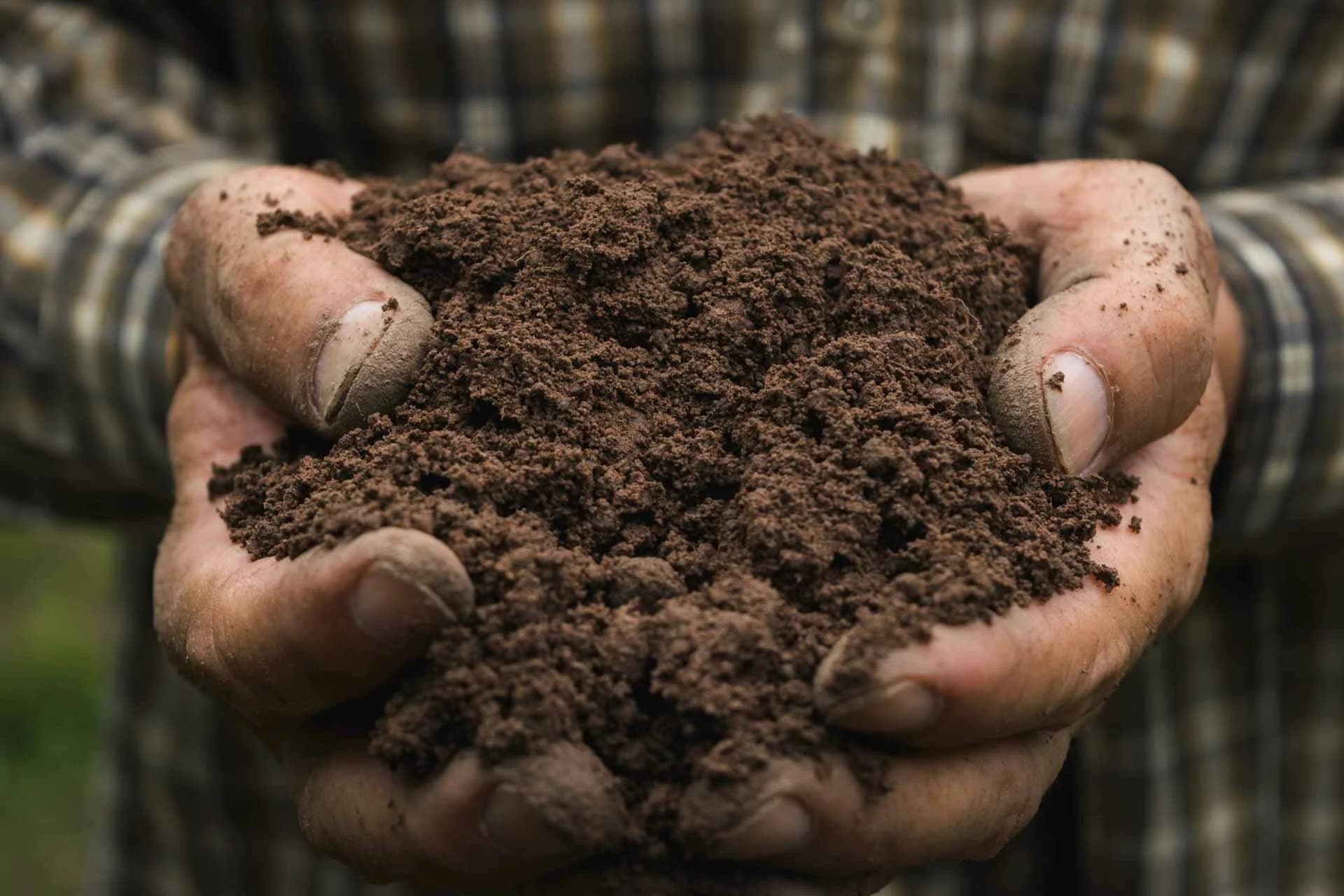
Trees rely on a steady supply of essential elements to thrive, just like any other living organism. In a forest ecosystem, trees naturally get what they need from decomposing leaves and other organic matter. However, in our managed urban landscapes, that natural process is often disrupted.
Why Trees Need Fertilizer
Trees absorb essential nutrients through their roots. These include macronutrients (nitrogen, phosphorus, potassium) and micronutrients (iron, manganese, zinc, copper, and others). When soil lacks these elements, trees may show reduced growth, thinning foliage, chlorosis (yellowing), or early leaf drop.
In forests, organic material breaks down and replenishes the soil. In yards and city settings, we rake leaves, mow grass, and remove plant debris, thereby reducing or eliminating nutrient cycling. Over time, this creates nutrient-poor soil that can't support optimal tree health.
When to Test Your Soil
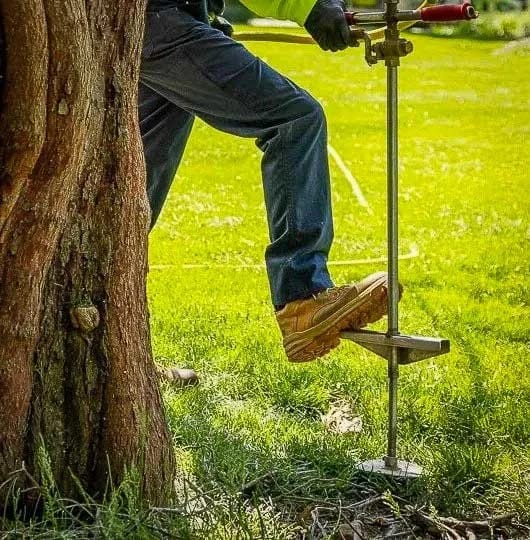
Before applying fertilizer, it's a good idea to test your soil. A soil test reveals whether your soil is deficient in any key nutrients, helping you avoid unnecessary fertilization. Our soil tests are professionally sampled and processed at an analytical laboratory, tailored to your specific needs.
After testing dozens of Edmonton-area soils, we've found that most tree root zones under manicured lawns are nutrient-deficient. The most common deficiency is nitrogen, which drains quickly through the soil profile.
If your trees grow in compacted soil with little organic matter, they likely need help.
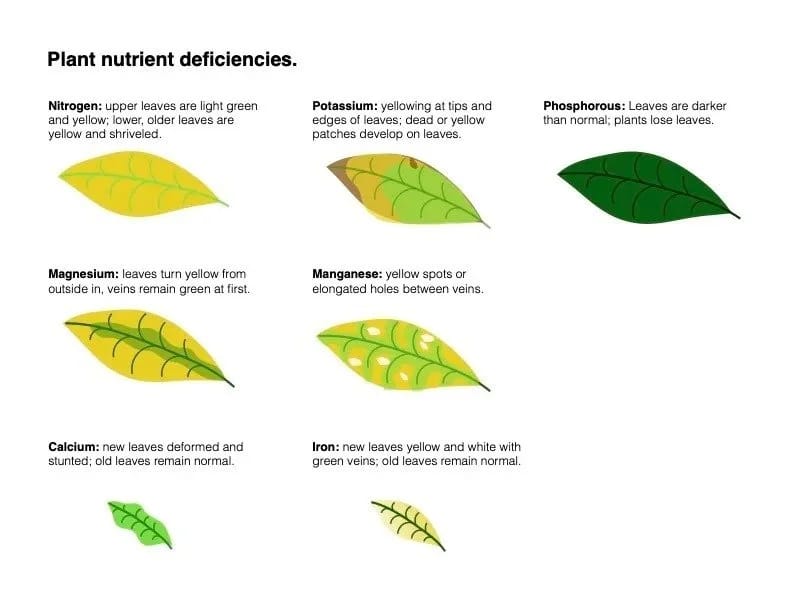
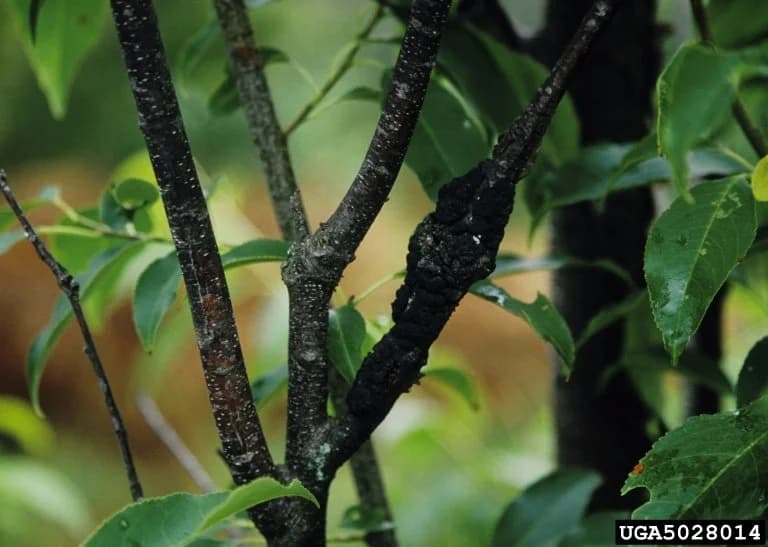
The image above shows how common nutrient deficiencies can appear. However, similar symptoms can also be caused by over- or under-watering, soil compaction, incorrect pH, insects, and other factors. A proper soil test is the best way to confirm whether fertilizing is recommended.
Long-Term and Short-Term Solutions
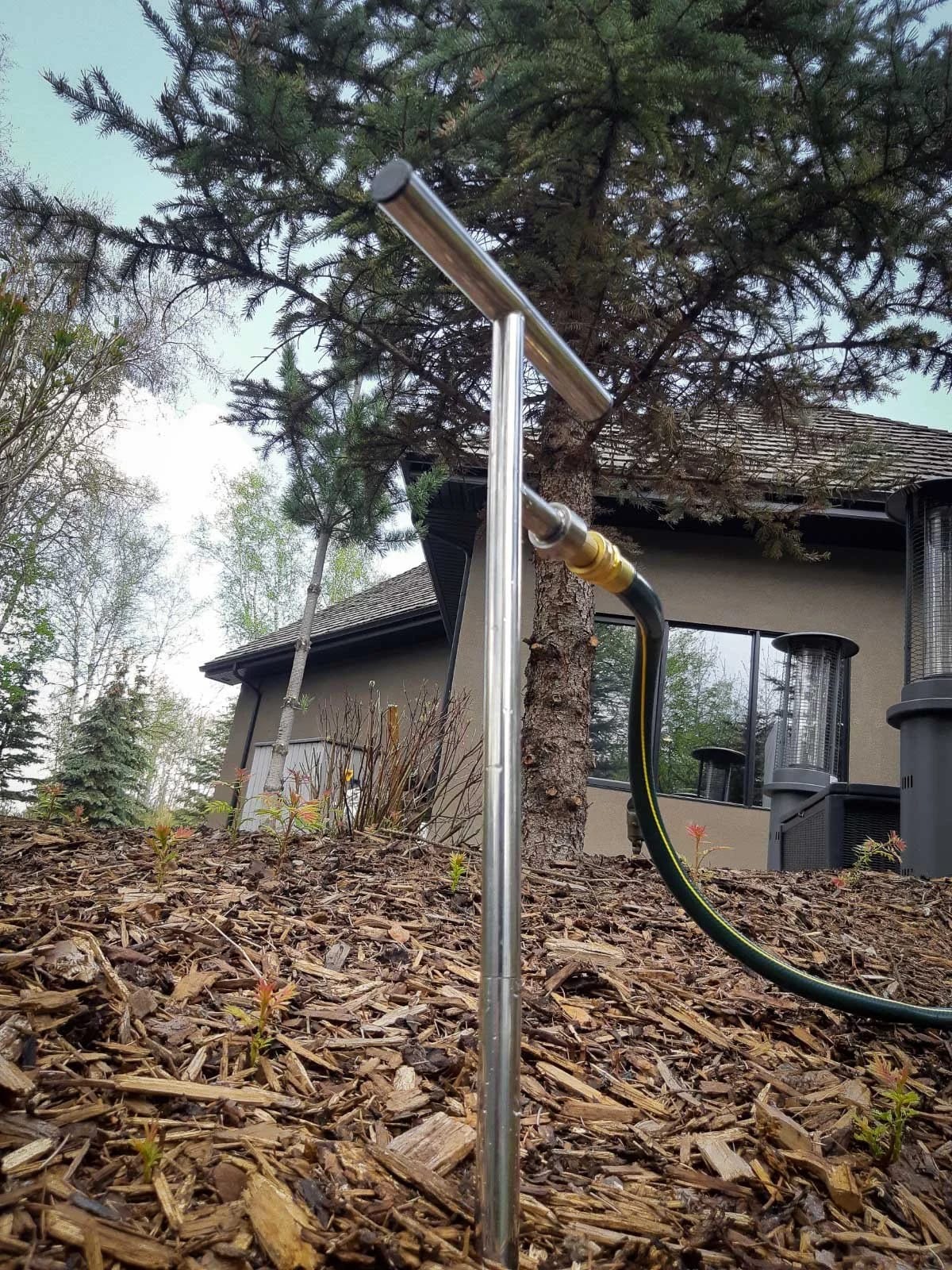
Long-term solution: mimic nature. Leave decomposing materials like leaves, grass clippings, or better yet, a layer of wood chips around the root zone of your trees. This organic mulch improves soil health and slowly releases nutrients. (Link to wood chip page).
Short-term solution: apply a deep-root, full-spectrum, slow-release fertilizer.
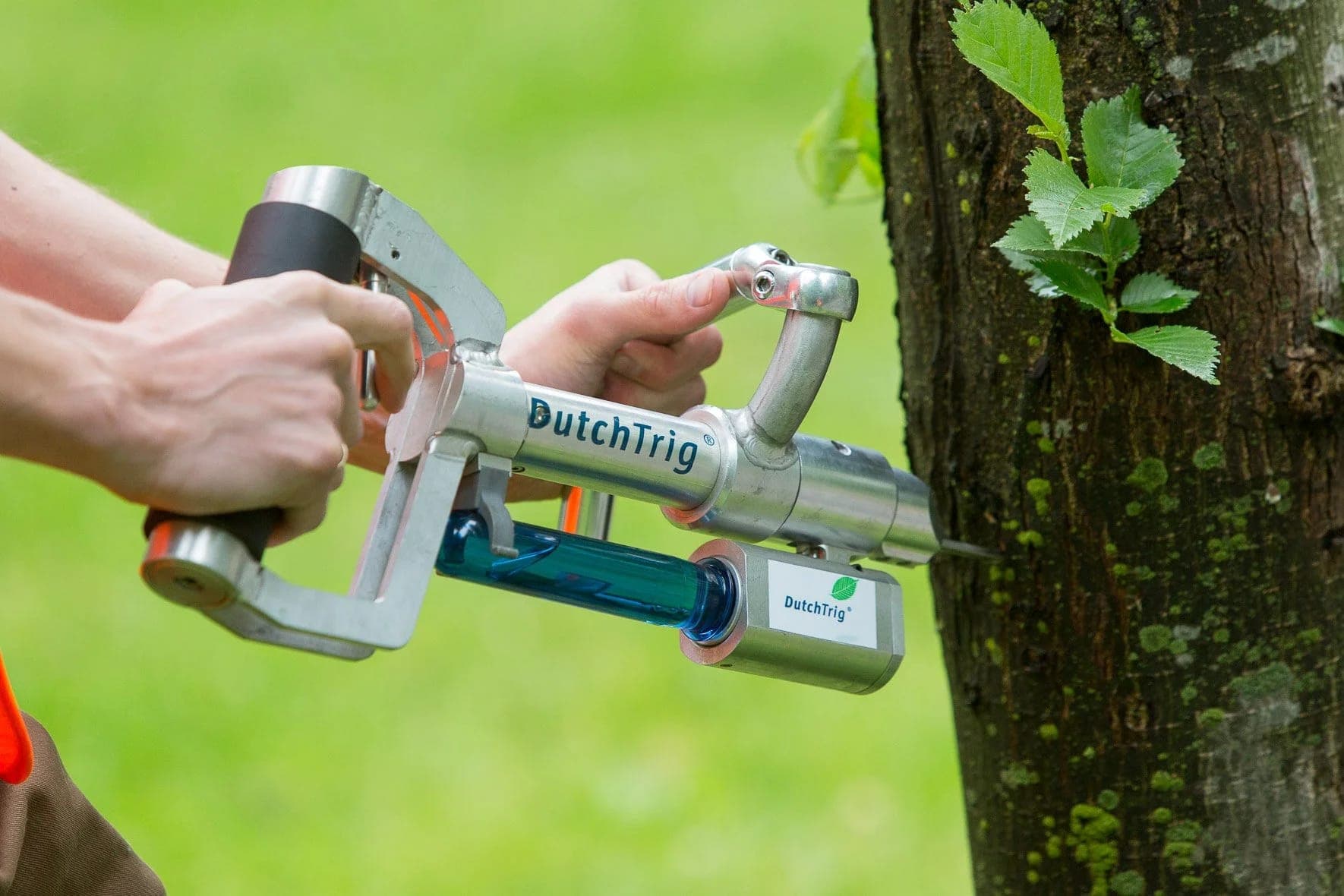
- Deep-root: Injected 10-20 centimeters below the surface so nutrients reach the tree's roots directly, bypassing turfgrass, runoff, and evaporation.
- Full-spectrum: Includes both macro and micronutrients, plus beneficial compounds like humic acids that support soil life. We can tailor the nutrient profile based on test results.
- Slow-release:. Unlike conventional fertilizers, slow-release fertilizers are not water-soluble. The molecules of fertilizer stay in the soil while the water drains away. This ensures steady nutrient availability, reducing waste and runoff.
Avoid quick-release fertilizers made for lawns or potted plants. They leach too quickly through soil and can contribute to groundwater pollution.
When Not to Fertilize
Fertilizer should be applied only if a soil test indicates a deficiency. Excessive fertilizer can harm tree health. Additionally, other disorders may appear similar to nutrient deficiency, so it's important to consult a certified arborist for diagnosis before adding any fertilizer.
Frequently Asked Questions
How often should I fertilize my trees?
That depends - are you making soil or taking away any organic material? With no organic material, trees often benefit from fertilizing at least once per year.
Can I use lawn fertilizer for my trees?
No. Lawn fertilizers are designed for shallow-rooted grasses, not deep-rooted trees, and often lack essential micronutrients.
Do mature trees need fertilizing?
Older trees still need nutrients, but less frequently. Over-fertilizing can stress large trees. Focus on long-term soil health instead (e.g., adding mulch).
Is mulching better than fertilizing?
Yes, for long-term soil health. Mulch provides slow, natural nourishment and, over time, improves soil structure by supplementing soil organic matter.
The Bottom Line
In Edmonton's urban environment, many trees live in nutrient-depleted soils. Fertilization can help restore balance—but only when used wisely.
Whenever possible, aim for natural solutions like mulching, and reserve deep-root fertilization for when your trees truly need it.
Request a free tree assessment
📞 Call: 780 271 8733
📧 Email: info@citytree.ca