Tree Health · Updated · Published · 9 min read
Healthy Soil, Healthy Trees: Common Below-Ground Issues Affecting Edmonton Trees
Five common below-ground soil issues affecting Edmonton trees and practical solutions to prevent long-term decline.
Table of Contents
Introduction
When trees struggle in Edmonton, homeowners often look for visible, above-ground causes — insects, disease, storm damage, or sunlight exposure.
In fact, many of the most common problems affecting Edmonton trees begin below ground.
Healthy trees depend on healthy soil. Most long-term tree decline does not begin in the canopy; it starts in the root zone.
In many Edmonton neighbourhoods, soil issues trace back to construction. Areas that were once farmland are now heavily developed subdivisions. During building, topsoil is stripped, heavy equipment compacts the ground, and the original soil structure is disrupted. If soil is not properly restored before landscaping, trees begin their lives at a disadvantage.
With ongoing development across the city, protecting and rebuilding healthy soil is one of the most important — and most overlooked — parts of long-term tree care.
Below are five of the most common below-ground issues affecting Edmonton trees, and what homeowners can do to prevent long-term decline
Five Common Below-Ground Issues Affecting Edmonton Trees
1. Soil Compaction Is Ignored
One of the biggest problems in Edmonton neighbourhoods — especially in newer developments — is soil compaction.
Heavy equipment during construction, foot traffic, and even routine lawn maintenance compress soil particles together. When soil becomes compacted:
- Oxygen cannot reach the roots
- Water does not infiltrate properly
- Roots struggle to expand and anchor the tree
Compacted soil slowly suffocates a tree.
One of the simplest ways to counteract surface compaction and begin rebuilding soil structure is by applying a proper layer of wood chip mulch around the root zone. Mulch helps protect soil from further compaction, moderates temperature swings, and supports the beneficial fungi and microbes that trees rely on.
This pattern appears across the city. Much of the land around Edmonton was once covered in rich Black Chernozem soil — some of the most fertile soil in the world. Well-known neighbourhoods such as Garneau, Terwillegar, and Mill Woods were formerly large agricultural areas. However, with development comes disturbance. During construction, valuable topsoil is often stripped or buried, and what remains may be compacted or replaced with nutrient-poor, clay-heavy fill. Trees planted into these altered conditions may look fine initially but can show gradual canopy thinning and decline over time.
(See also: Protecting Trees on Construction Sites in Edmonton.)
2. Clay Soil Is Misunderstood
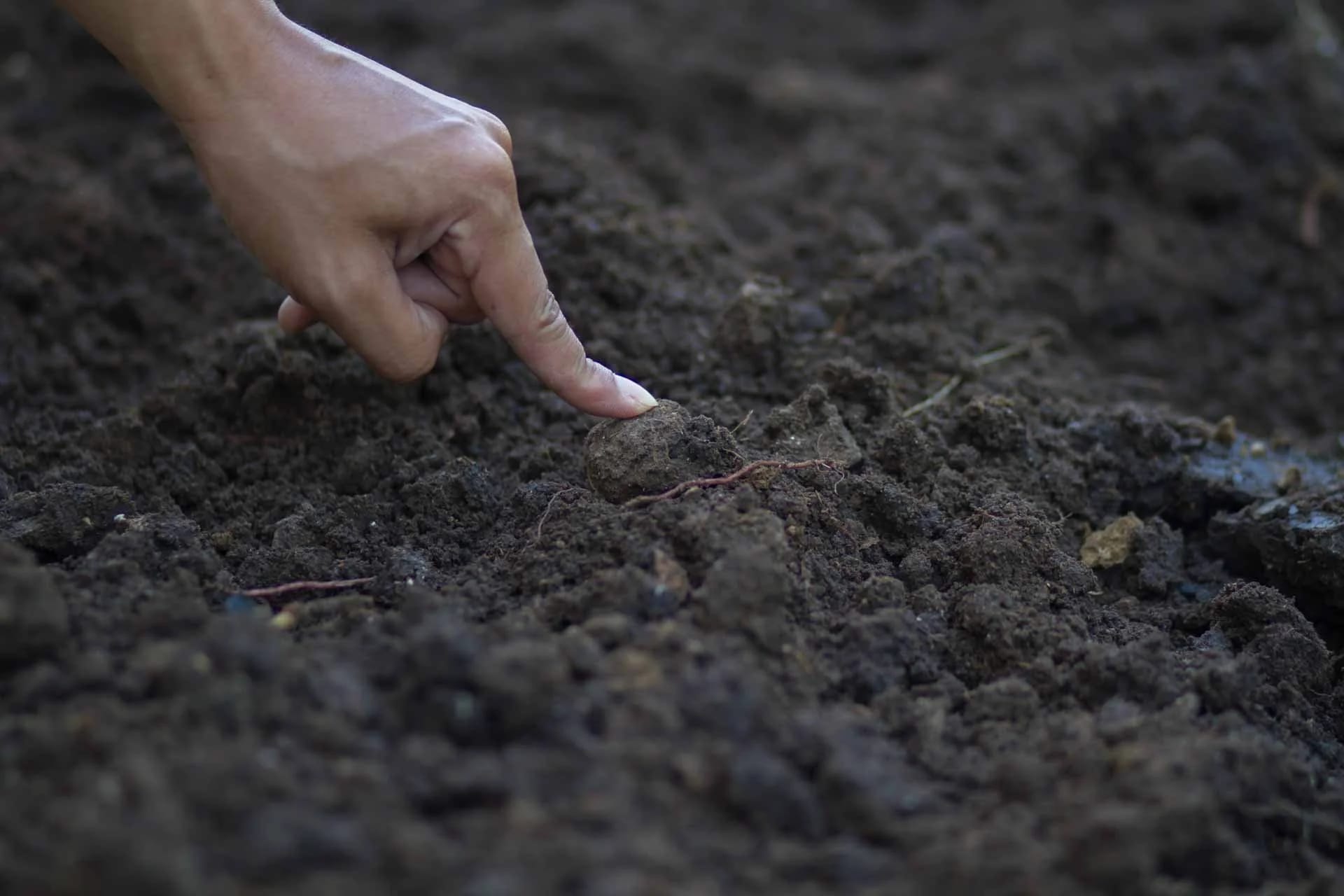
Heavy clay soil can feel dense and compacted. While it holds nutrients well, it also drains slowly — which can create root stress if watering is not managed properly.
Edmonton's soil often contains heavy clay. Clay holds nutrients well — but it also holds water.
Homeowners often assume:
"More water is better."
Or, "The lawn is green, so the tree must be fine."
Clay drains slowly. Overwatering can lead to root rot and fungal issues, while underwatering during hot, dry stretches can cause stress cracks and canopy dieback.
The goal is not more water — it is the right amount at the right depth.
Deep, infrequent watering encourages stronger root systems. Shallow, frequent watering creates surface roots and long-term instability.
3. Trees Are Treated Like Lawns
Grass and trees have very different needs.
Lawn fertilizer programs are designed for turf, not woody plants. In some cases, repeated turf fertilization can disrupt soil balance for trees.
Healthy soil biology — including beneficial microbes, organic matter, and mycorrhizae — plays a major role in tree health. Mycorrhizae are underground fungal networks that form symbiotic relationships with tree roots, helping them absorb water and nutrients more efficiently. When soil becomes compacted, overwatered, or repeatedly exposed to excessive fertilizer, these beneficial fungal networks can be drastically reduced. As soil biology declines, trees lose part of their natural support system and may weaken slowly over the years.
Targeted tree fertilization programs differ from lawn applications and should be based on actual soil conditions.
4. Soil Testing Is Rarely Done
Most homeowners guess.
Soil testing removes that guesswork.
A proper soil assessment can identify:
- Nutrient deficiencies
- pH imbalance
- Organic matter levels
- Drainage concerns
Without testing, fertilizing becomes reactive rather than strategic.
In many cases, soil improvements — aeration, organic amendments, adding a proper layer of mulch around the root zone, or a structured fertilization plan — significantly improve long-term tree health. In fact, applying mulch correctly is often the simplest and most effective first step homeowners can take to improve soil structure and support beneficial soil biology.
5. The Root Zone Is Damaged During Renovations
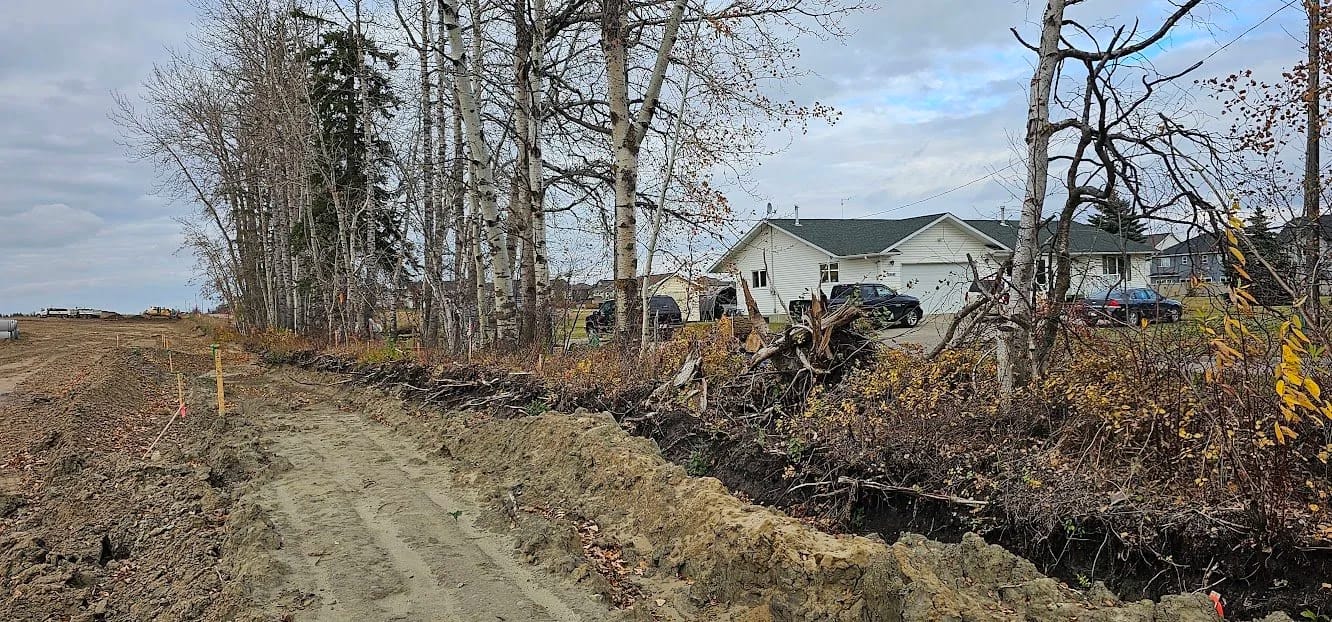
A construction trench cut directly beside a row of mature trees in a developing Edmonton neighbourhood. The excavation exposes disturbed soil and illustrates poor soil management practices that can damage tree roots and lead to long-term decline.
Root damage during landscaping and renovation projects is another common issue.
Installing patios, driveways, fences, or raised garden beds near mature trees can:
- Sever structural roots
- Change soil grade and drainage
- Increase compaction around the trunk
Because root systems extend well beyond the canopy, damage often occurs farther out than homeowners expect.
Once roots are compromised, visible decline may not appear for several seasons.
This is why planning around trees during construction matters. Protecting the root zone and preserving existing soil structure can prevent long-term stress that only becomes visible years later.
Tree Planting and Soil Compatibility
Not all trees thrive in all soil conditions.
Site selection matters.
For example, a depressed area with a high water table may support moisture-tolerant species such as willow, while a lilac planted in the same location could struggle with excess moisture and root decline.
Understanding soil type, drainage patterns, and water table levels before planting improves survival rates and long-term performance.
Proper tree planting practices start with matching the right species to the right soil conditions, not just choosing based on appearance.
Why This Matters
When soil conditions are ignored, homeowners often assume removal is the only option once decline becomes visible.
In reality, many trees can be preserved if root-zone issues are identified early. When soil health declines, trees become stressed — and stressed trees are far more vulnerable to insect infestations and disease outbreaks. In many cases, pests and pathogens are secondary symptoms of underlying soil problems rather than the primary cause.
Healthy soil supports:
- Strong structural development
- Improved drought tolerance
- Reduced storm failure risk
- Better resistance to pests and disease
Soil management is not a quick fix — it is a long-term strategy.
Frequently Asked Questions
How can I tell if my soil is compacted?
Signs of soil compaction include standing water after rainfall, thinning canopy growth, reduced annual shoot growth, and exposed surface roots. If water pools instead of soaking in, roots may not be receiving enough oxygen. A professional assessment can confirm compaction levels and recommend corrective steps.
Is mulch really that important for tree health?
Yes. Properly applied wood chip mulch is one of the most effective ways to improve soil conditions. A 2–4 inch layer around the root zone helps regulate moisture, reduce temperature extremes, prevent further compaction, and support beneficial soil fungi. Over time, mulch naturally improves soil structure as it breaks down.
Can poor soil lead to insect or disease problems?
Absolutely. Trees growing in stressed soil conditions are more vulnerable to pests and pathogens. In many cases, insects and disease are secondary factors rather than the original cause of decline.
How often should trees in Edmonton be watered?
Most established trees benefit from deep, infrequent watering rather than light daily irrigation. In clay-heavy soils common in Edmonton, overwatering can be just as harmful as drought stress. Water should soak deeply into the root zone and be adjusted based on rainfall and seasonal conditions.
Where can I get wood chips for my trees in Edmonton?
If you are looking for wood chips in Edmonton, our company provides fresh arborist wood chips delivered directly to your property through our Chip Drop service. These natural wood chips are ideal for building healthy soil around trees. Applied in a 2–4 inch layer, they improve moisture retention, reduce compaction, support beneficial fungal networks, and gradually enhance soil structure as they break down.
Learn more about our Chip Drop service and how locally sourced arborist mulch can strengthen your soil and support long-term tree health.
A Smarter Approach
If a tree appears stressed, declining, or underperforming, the solution often begins underground.
A professional tree health assessment can evaluate:
- Soil structure and compaction
- Root flare condition
- Watering practices
- Nutrient availability
From there, targeted improvements — including aeration, organic soil amendments, proper mulching, species-appropriate planting guidance, and fertilization — can restore stability and growth.
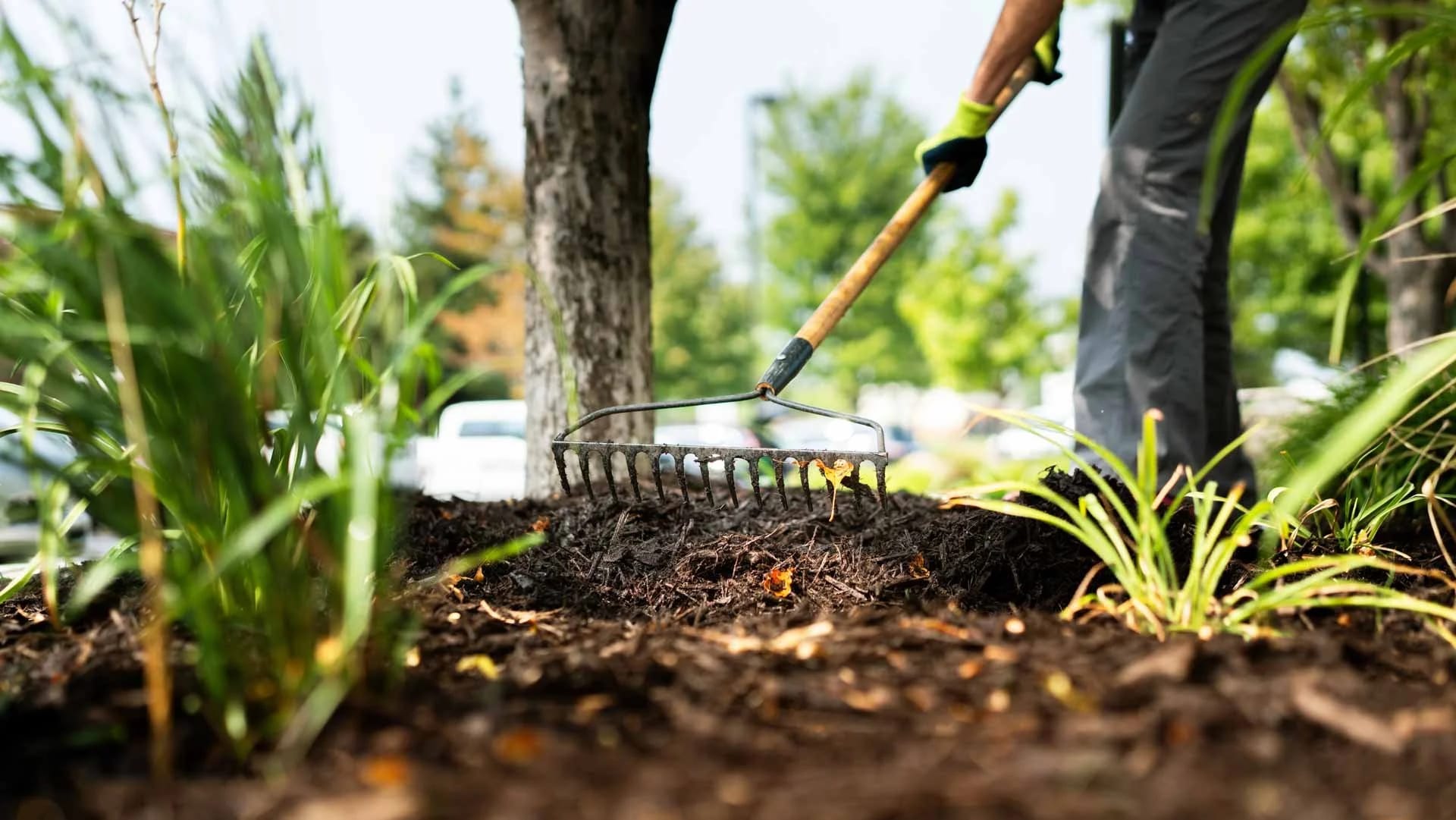
Applying a 2–4 inch layer of wood chip mulch helps retain moisture, reduce compaction, and support healthy root growth.
One of the most effective and affordable improvements is applying a proper layer of wood chip mulch around the root zone. A 2–4 inch layer of arborist wood chips helps regulate soil temperature, retain moisture, reduce compaction from foot traffic, and support beneficial fungal networks like mycorrhizae. Over time, mulch breaks down and improves soil structure naturally.
For homeowners looking for an easy starting point, adding fresh wood chip mulch is often the single best step you can take to improve soil health. (See our Chip Drop service for locally sourced arborist mulch.)
Healthy soil leads to healthier trees — and healthier trees shape stronger neighbourhoods. In a city like Edmonton, where wind, heavy snow, freeze-thaw cycles, and summer drought all place stress on urban landscapes, resilience begins below your feet.
If you are unsure whether your trees are getting what they need underground, a professional assessment is not just reactive, it is preventative. Identifying soil issues early can extend the life of mature trees, reduce the likelihood of storm damage, and protect the long-term value of your property.
Tree health truly starts from the ground up.
If you want clarity about what is happening below your trees, and a practical plan to strengthen them, schedule a professional tree health assessment and take a proactive step toward long-term resilience.
Call: 780 271 8733
Email: info@citytree.ca