Services: Edmonton & area
Tree Health Assessments in Edmonton
Find out what's wrong with your tree.
Why early diagnosis matters
Most tree problems are far cheaper to fix than a removal.
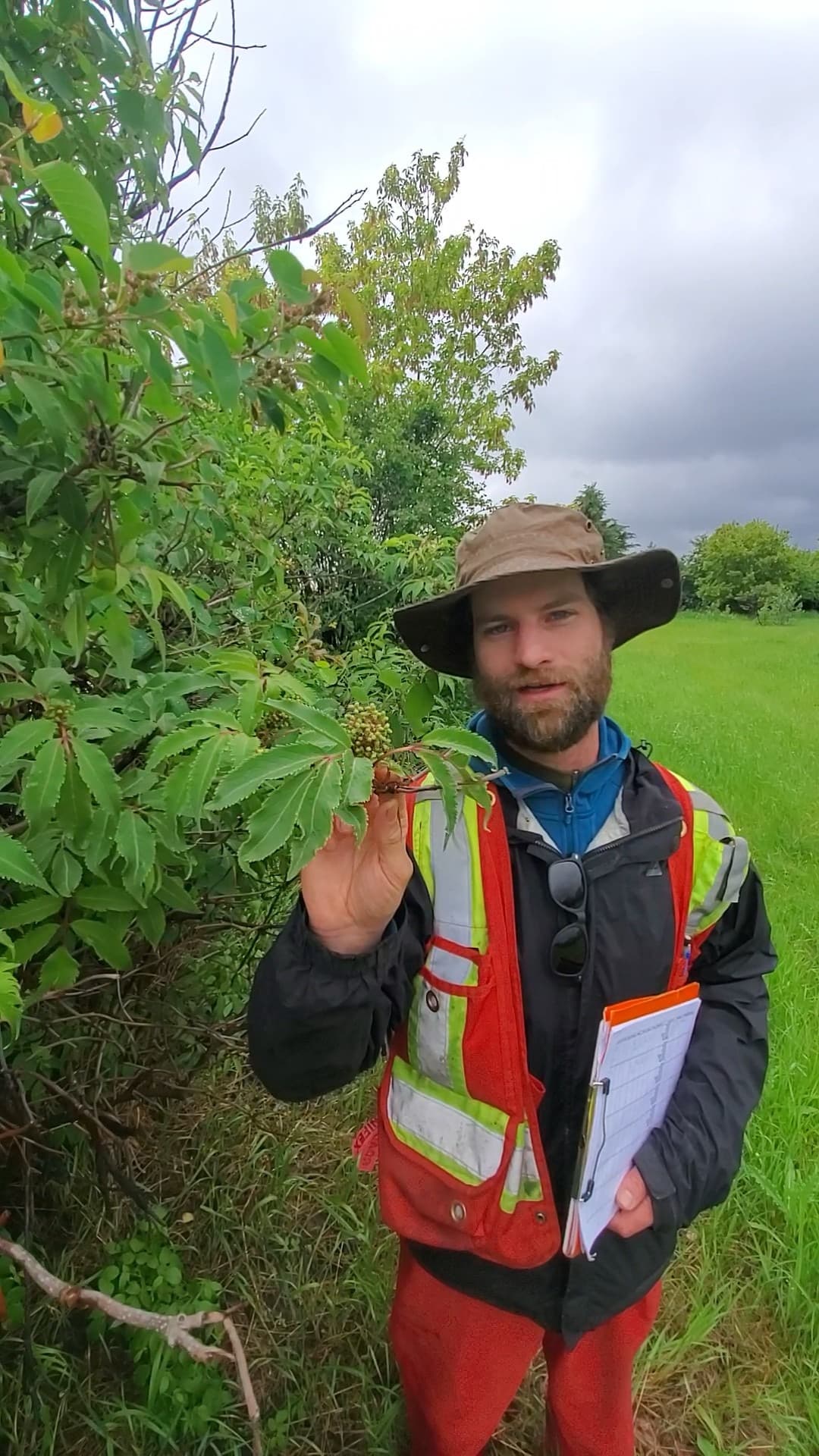
If a tree on your property looks 'off' (discoloured leaves, thinning canopy, dieback at the tips, sap weeping from the trunk, mushrooms at the base), getting an arborist to look at it sooner is almost always the right move. Many species common in Edmonton have specific diseases and pests that need a trained eye to identify.
- Dutch elm disease: monitored across the city, preventable on individual trees
- Black knot on cherries, mayday, and chokecherries
- Poplar boring beetle on Swedish columnar aspens and towering poplars
- Girdling roots on planted trees within 10 years of installation
How we work
Diagnose first. Treat only what's actually needed.
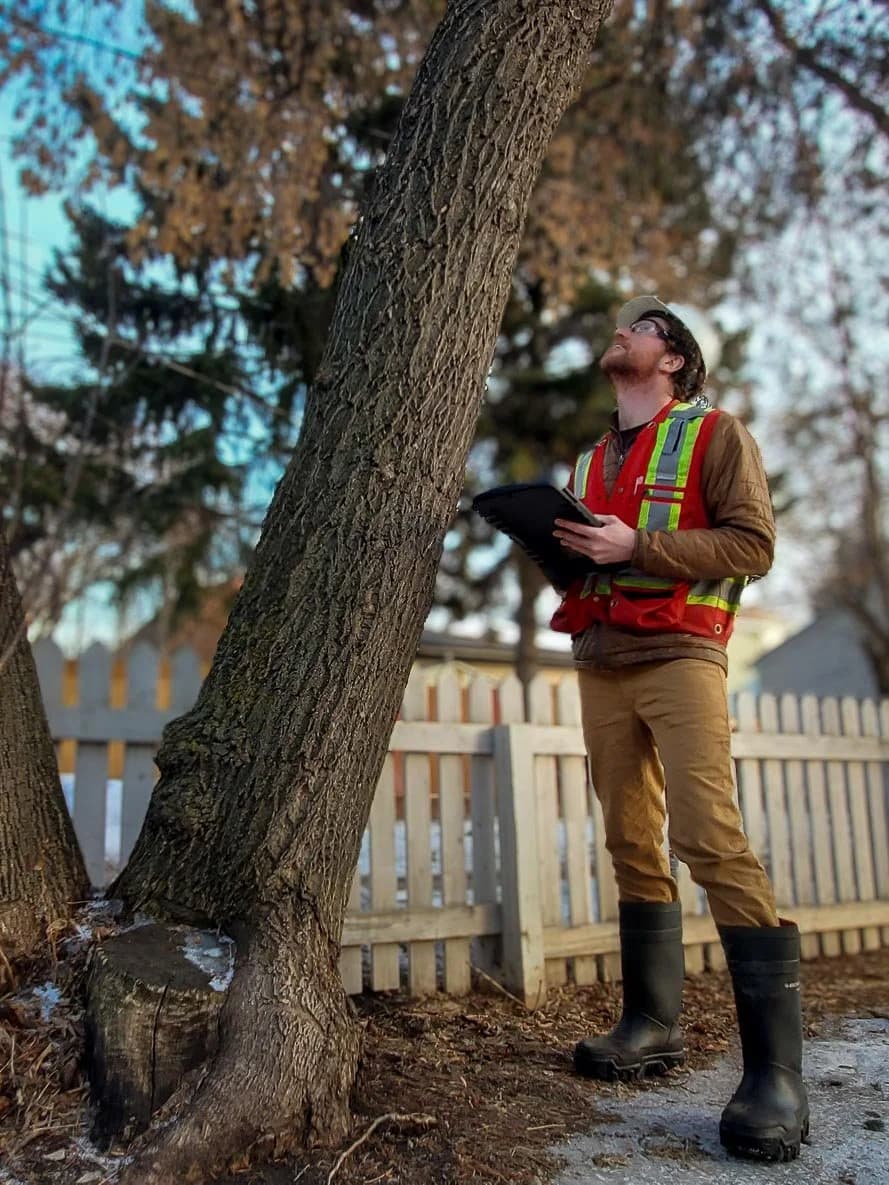
A health assessment is a structured inspection: canopy, trunk, root flare, surrounding soil. We diagnose what we find and put together a recommended treatment plan if one is needed. All of our arborists hold a Bachelor of Science in Forest Sciences, which gives us deep knowledge of the forest pathogens affecting trees in our area, and we send diseased tissue to a laboratory when needed to confirm a diagnosis. Most of the time the answer isn't expensive. Sometimes it is. Either way you get an honest read, and we recommend the least-intervention option that works.
What we diagnose & treat
Common issues we work on across Edmonton.
Dutch Elm Disease
Annual Dutch Trig trunk injections for prevention. Once symptomatic, provincial law requires removal. We handle both.
Black Knot
Cherries, mayday, chokecherries. Pruning out infected wood at the right time of year, and proper disposal.
Insect Infestations
Aphids, scale, bronze birch borer, sawflies. Identification, treatment timing, and biological controls where suitable.
Girdling Roots
Often invisible, common on planted trees. Root collar excavation and corrective pruning of the offending roots.
Soil & Site Issues
Compaction from construction, grade changes, herbicide drift, drought stress. Soil aeration, deep root watering, mulch.
Cabling & Bracing
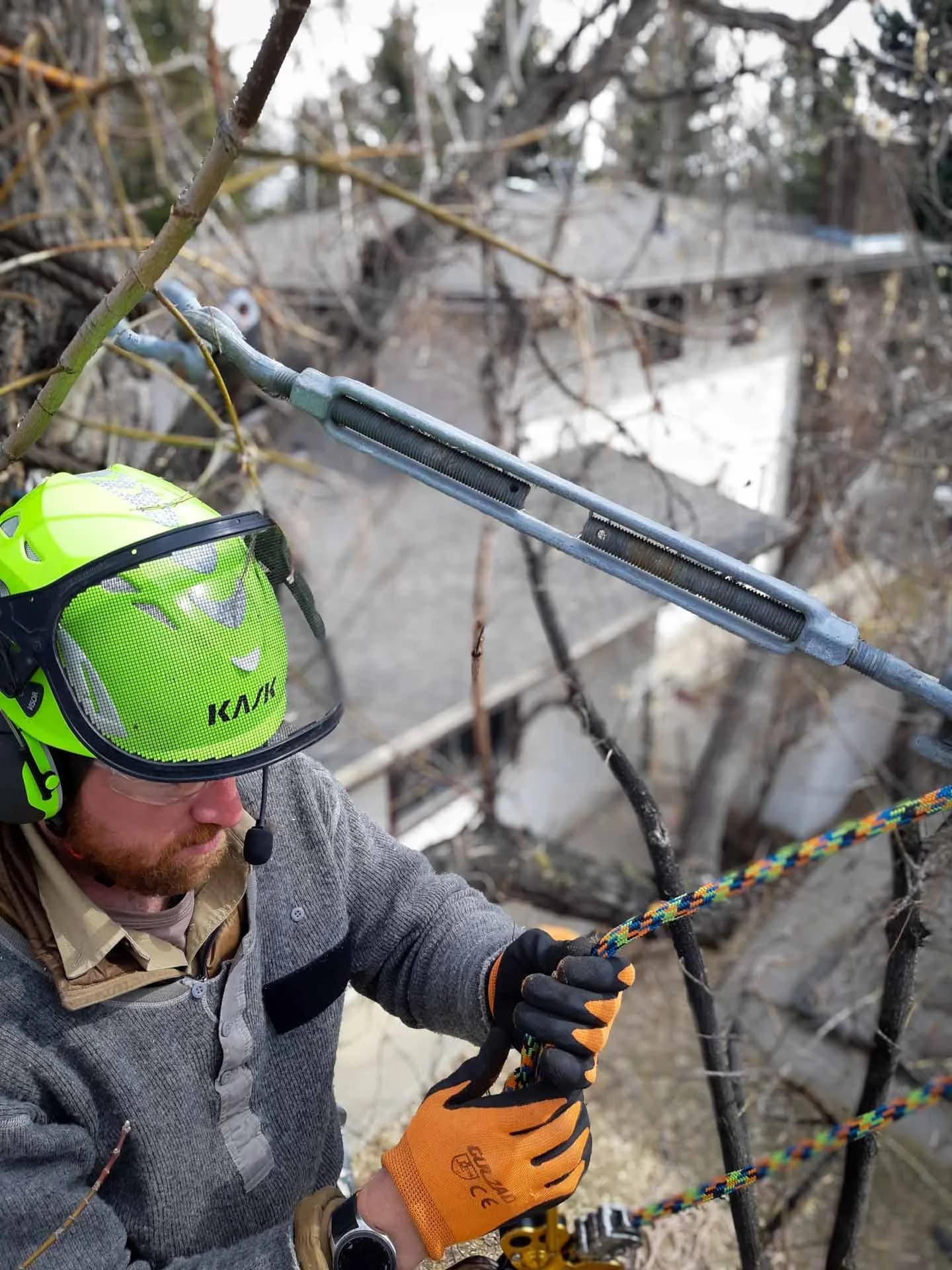
Structural support for high-value trees with weak unions or large lateral limbs over targets.
Want a quote for health assessments?
An ISA-certified arborist walks your property and gives you a detailed quote in writing.
Recent diagnostic work
Assessments and treatments from this season.
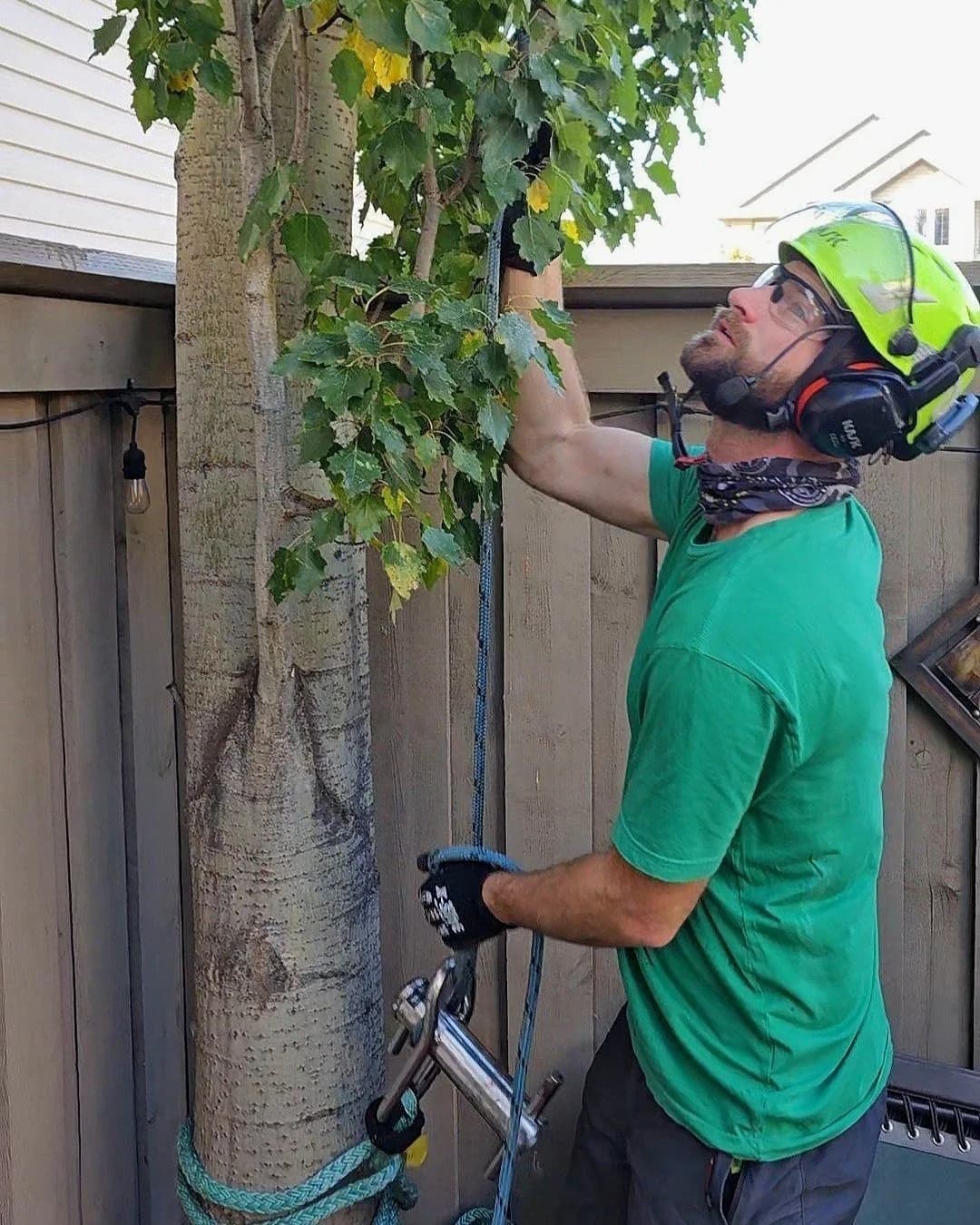
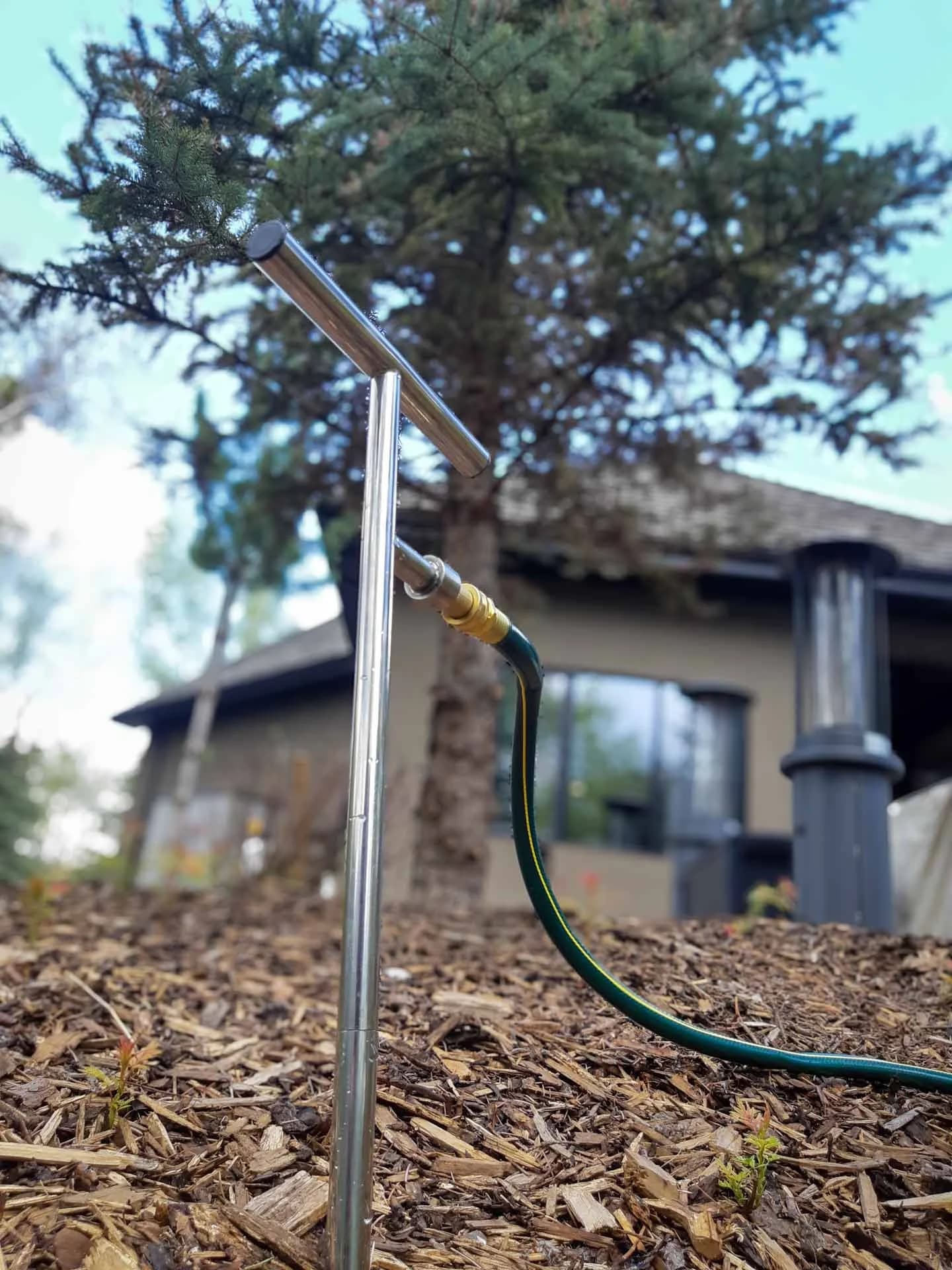
How a health assessment runs
Inspection, diagnosis, treatment plan.
Comprehensive evaluation
An ISA-certified arborist assesses canopy, trunk, root flare, soil, and surroundings, and confirms or rules out specific Edmonton pathogens.
Customized plan
Clear written recommendations with photos and timelines. We separate must-do from nice-to-have.
Targeted treatment
Pruning, soil work, cabling, or trunk injection where required. We're conservative with chemicals: least-intervention first.
Ongoing monitoring
Watering, mulching, and follow-up inspection guidance. For high-value trees, annual or biennial check-ins.
When to inspect and treat
When each job is best done.
Edmonton's seasons drive the right time for most diagnostic and treatment work. We'll tell you if something can wait, or if it can't.
- Year-round
Pruning & structural assessment
Most species can be pruned any time, and sooner usually beats waiting. Late winter is a good window for structural work, with branches visible and disease pressure low. Elms are the exception: October 1 to March 31 only.
- Late May – early June
Dutch Trig elm injections
Leaves about 75% open, active sap flow, pre-summer heat.
- Mid-summer
Active monitoring
Diseases visibly active; insects emerging; right time to confirm diagnoses on canopy issues.
- Fall
Soil work & deep root watering
Soil decompaction, micronutrient supplementation, fall watering before freeze-up.
- ISA Certified ArboristsEvery assessment
- Master Arborist on staffThe highest certification in the industry
- Edmonton-specific expertiseDutch elm disease, black knot, elm care
- $5M liabilityFully insured, WCB covered
- Preservation-firstWe treat before we remove
Where we work
Edmonton & surrounding communities.
We assess and treat trees across Edmonton and surrounding communities, particularly heavily through elm injection season and dormant-pruning months.
Heritage elms: heavy injection and monitoring work.
Riverdale, Virginia Park & Highlands
River-valley canopy: poplar boring beetle, mature-tree decline.
Mature lots with infill stress on existing trees.
Forest Heights, Capilano & Ottewell
Aging canopy with widespread spruce and elm health work.
Newer plantings: girdling roots and establishment issues.
Downtown, Old Strathcona & central Edmonton
Urban heat and compaction stress on mature trees.
St. Albert & Sherwood Park
Regular service across both surrounding municipalities.
Want a quote for health assessments?
An ISA-certified arborist walks your property and gives you a detailed quote in writing.
Frequently asked
Tree Health Assessments FAQs
How can I tell if my tree is dead or dying?
Some clear signs: more than 30-40% of the crown is bare in mid-summer; fungal conks (mushrooms) are growing from the trunk or root flare; large sections of bark are sloughing off the trunk; the tree leans more than it used to; or scratching the bark with a thumbnail in early summer doesn't reveal green tissue underneath. Any of those is reason for a professional assessment. A dying tree is sometimes saveable; a dead tree is a hazard that should be removed.
How much does a tree health assessment cost?
Pricing depends on whether you need a verbal on-site assessment or a written report, and on the number of trees and the depth of diagnosis involved. Treatment costs (if any) are quoted separately, and only after we've confirmed what's actually needed.
Can you treat Dutch elm disease?
Prevention, yes, through annual Dutch Trig trunk injections, a biological vaccine with excellent efficacy for protecting healthy elms. Once a tree shows symptoms of active Dutch elm disease infection, it cannot be saved and must be removed under municipal bylaw to prevent spread.
Do I need to fertilize my trees?
In most established Edmonton lawns, no. The trees are getting enough nutrients from the surrounding soil and decomposition. Fertilizing a stressed tree without diagnosing the actual problem can make things worse. We test soil and recommend nutrient supplementation only when there's a measured deficiency.
How often should I schedule a tree health check?
Every 2–3 years is ideal for most mature trees. Younger or high-risk trees (near structures, roads, or under storm exposure) benefit from annual assessments. We'll tell you honestly when a tree doesn't need anything yet.
Can a sick tree be saved, or does it need to be removed?
In many cases, yes. Early treatment through pruning, soil improvement, and pest management can restore health and stability. Removal is a last resort. There are conditions (Dutch elm disease that's already symptomatic, advanced internal decay) where saving the tree isn't realistic. We'll tell you straight.
Do you use chemical fertilizers or pesticides?
Only when necessary. We prioritize organic soil care, pruning, and sanitation methods before any targeted treatments are applied. When chemicals are the right call (Dutch Trig elm injections, for example), we use them with closed-system delivery and conservative dosing.
Other services
Complete tree care across Edmonton.
From the field notes
More on health assessments.
Common Tree Diseases in Edmonton & How to Treat Them
How to identify and treat six tree diseases common in Edmonton — black knot, fire blight, Dutch elm disease, leaf miners, cedar-apple rust and apple maggot.
Read moreHealthy Soil, Healthy Trees: Common Below-Ground Issues Affecting Edmonton Trees
Five common below-ground soil issues affecting Edmonton trees and practical solutions to prevent long-term decline.
Read moreDo I Need to Fertilize My Trees in Edmonton?
When Edmonton trees actually benefit from fertilization, how to test soil first, and why mulch is often a better long-term answer.
Read more
Ready for a quote?
An ISA-certified arborist will walk your property, talk through what your trees need, and give you a detailed quote in writing.