News · Updated · Published · 3 min read
Dutch Elm Disease Is in Edmonton: Andy's Take on CBC
Dutch elm disease has reached Edmonton. City Tree Service's Andy Fitzsimmons explains the risk, the warning signs, and what it means for the city's 90,000 elms on CBC Edmonton AM.
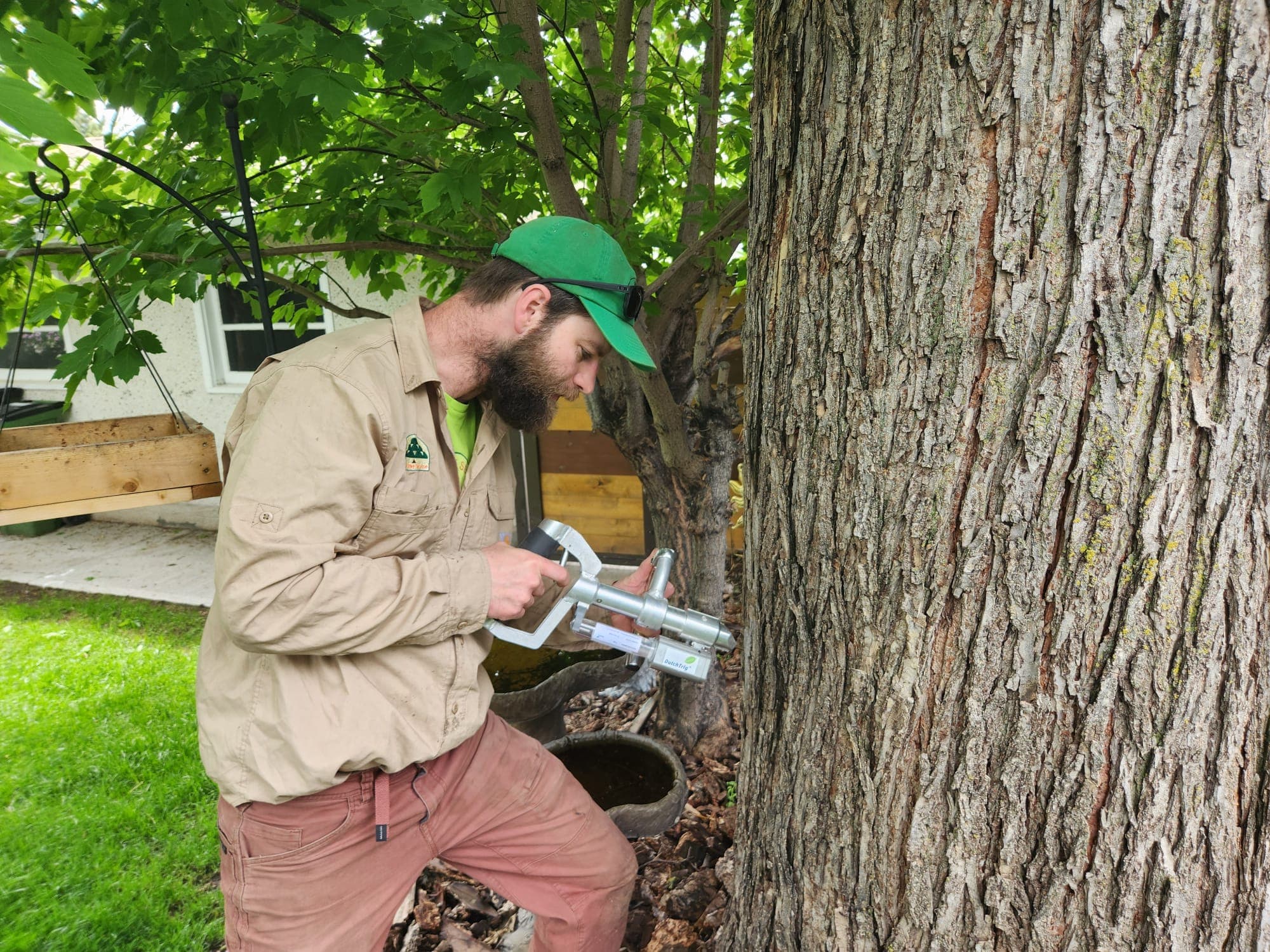
Table of Contents
Andy on CBC: What Dutch Elm Disease Means for Edmonton's Elms
City Tree Service owner and board-certified master arborist Andy Fitzsimmons was back on CBC's Edmonton AM with host Tara, this time on a heavier topic: Dutch elm disease (DED) has been confirmed in Edmonton, with the two most recent cases in Northmount and Rossdale.
For a city that owns roughly 90,000 elms, about 22% of all city-owned trees, that's a big deal. Edmonton holds one of the largest stands of DED-free American elms in North America, and this is the moment that canopy has been bracing for.
Listen to the full CBC segment here:
CBC Radio, Edmonton AM: Two Trees with Dutch Elm Disease Removed
The Short Version
Andy has expected DED to reach Edmonton for his entire career. His framing on air says it best:
"It's not about totally avoiding it anymore. Now it's about, it's here, how do we manage it?"
The disease is a fungus that only affects elms. It moves through the tree's vascular system and cuts off its water supply, so an infected tree can die fast. It's carried by a beetle that's lived here for decades. The new threat is the fungus those beetles are now spreading tree to tree, and through the connected roots of boulevard elms.
What to Watch For
Without giving the whole interview away, Andy walked through the signs worth knowing as a homeowner:
- Flagging: a branch or two where the leaves droop and sag but don't drop off.
- Early color change: an elm turning yellow and shedding leaves early while the elms around it stay green. That comparison to the neighbours is the tell.
If one tree tests positive, the city may remove it plus the elms within roughly 100 metres to stop root-graft spread, often five or more trees per case. It's a hard call, but as Andy puts it, being proactive beats losing the whole population.
Can You Protect a Healthy Elm?
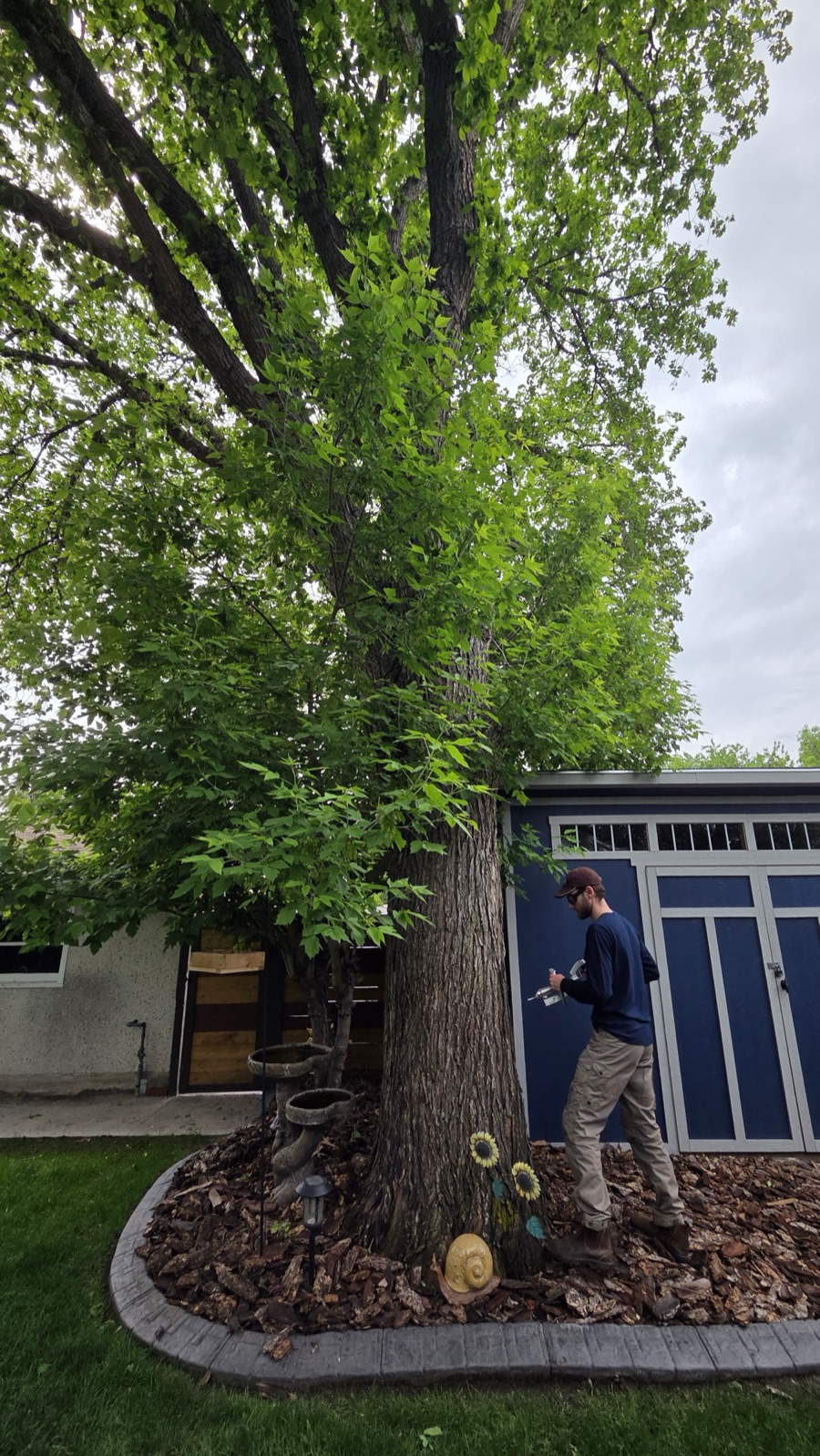
Once a tree has DED, there's no reliable way to save it. But healthy elms can be defended. The best preventative Andy knows of is trunk injection: an arborist injects a protectant directly into the tree, annually or every few years depending on the product, so it's covered if the disease arrives. The city is also running pheromone traps to catch the beetle.
His longer-term hope is more diverse planting: alternating elm, oak, and ash along boulevards instead of solid rows of one species, so roots don't touch and a single outbreak can't take a whole street.
And Then There Were the Storms
Andy also touched on Edmonton's recent run of major storms, with more trees down or broken than he's seen in his career. His advice runs counter to the panic:
- Don't jump to removal. Most trees survived the storms and are still standing.
- Get concerning trees assessed by an arborist, especially any near homes, playgrounds, or parking.
- Mushrooms at the base of a trunk signal serious internal decay, a real warning sign if the tree is close to people or structures.
In most cases, a bit of pruning is all that's needed.
Worried about an elm on your property?
An ISA-certified arborist will walk your property and give you honest advice on what your trees actually need, including whether injection makes sense for your elms.