Tree Removal · January 8, 2025 · 4 min read
Is Your Tree at Risk? Tree Removal vs Saving Trees in Edmonton
How to tell when an Edmonton tree needs removal versus when preservation is the right call — what to look for and when to call an arborist.
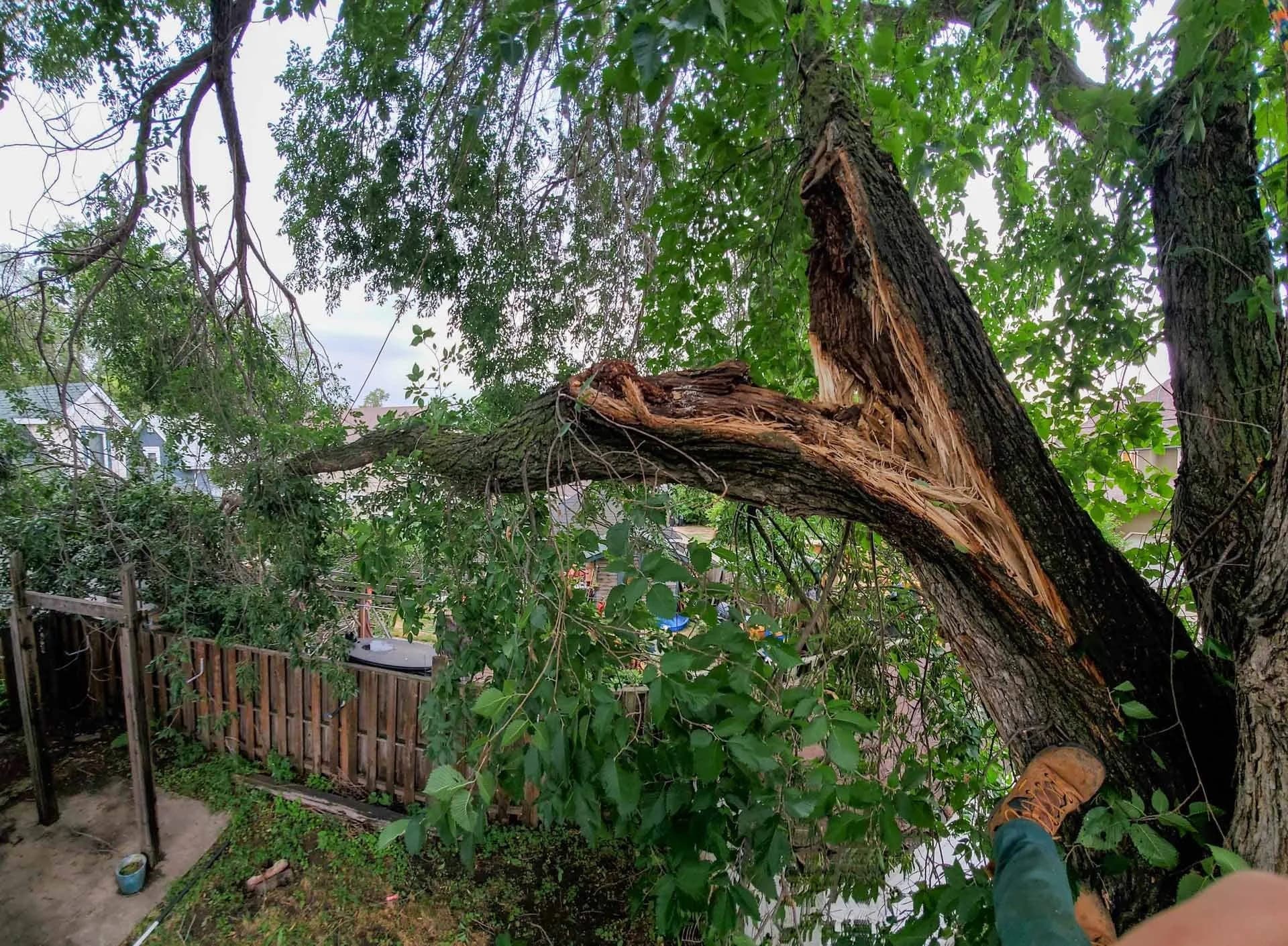
If you're searching for tree removal in Edmonton, chances are you're worried about safety — a leaning tree, dead branches, or recent storm damage. The good news? Many trees that look dangerous can often be preserved with the right care. Knowing the difference can protect your property, your family, and Edmonton's urban canopy.
Common Warning Signs Homeowners Notice
Most trees that we assess don't require removal. But these signs mean it's time to get a professional assessment:
- Large dead or hanging branches
- Cracks in the trunk or splitting bark
- Sudden leaning or soil lifting at the base
- Fungal growth (mushrooms, conks) on the trunk or roots
- Significant dieback in the canopy
- Storm damage or lightning strikes
Important: These symptoms don't automatically mean removal — they signal risk that should be evaluated by a certified arborist.
When a Tree Can Be Saved
Many trees showing early stress or structural issues can be preserved with targeted care:
- Selective pruning to remove hazardous limbs or reduce excessive stem leverage.
- Soil improvement to address compaction, drainage, or low organic matter
- Cabling or bracing for structural support
- Pest or disease management especially when caught early
- Ongoing monitoring to manage long-term risk
Preserving mature trees maintains shade, property value, and neighbourhood character — especially in Edmonton's mature neighbourhoods such as Glenora, Westmount, Garneau, Strathcona, Bonnie Doon, Ottewell, Forest Heights, and Capilano.
This is particularly important in neighbourhoods experiencing infill development, where proactive tree care can help protect valuable trees during construction.
When Tree Removal Becomes Necessary
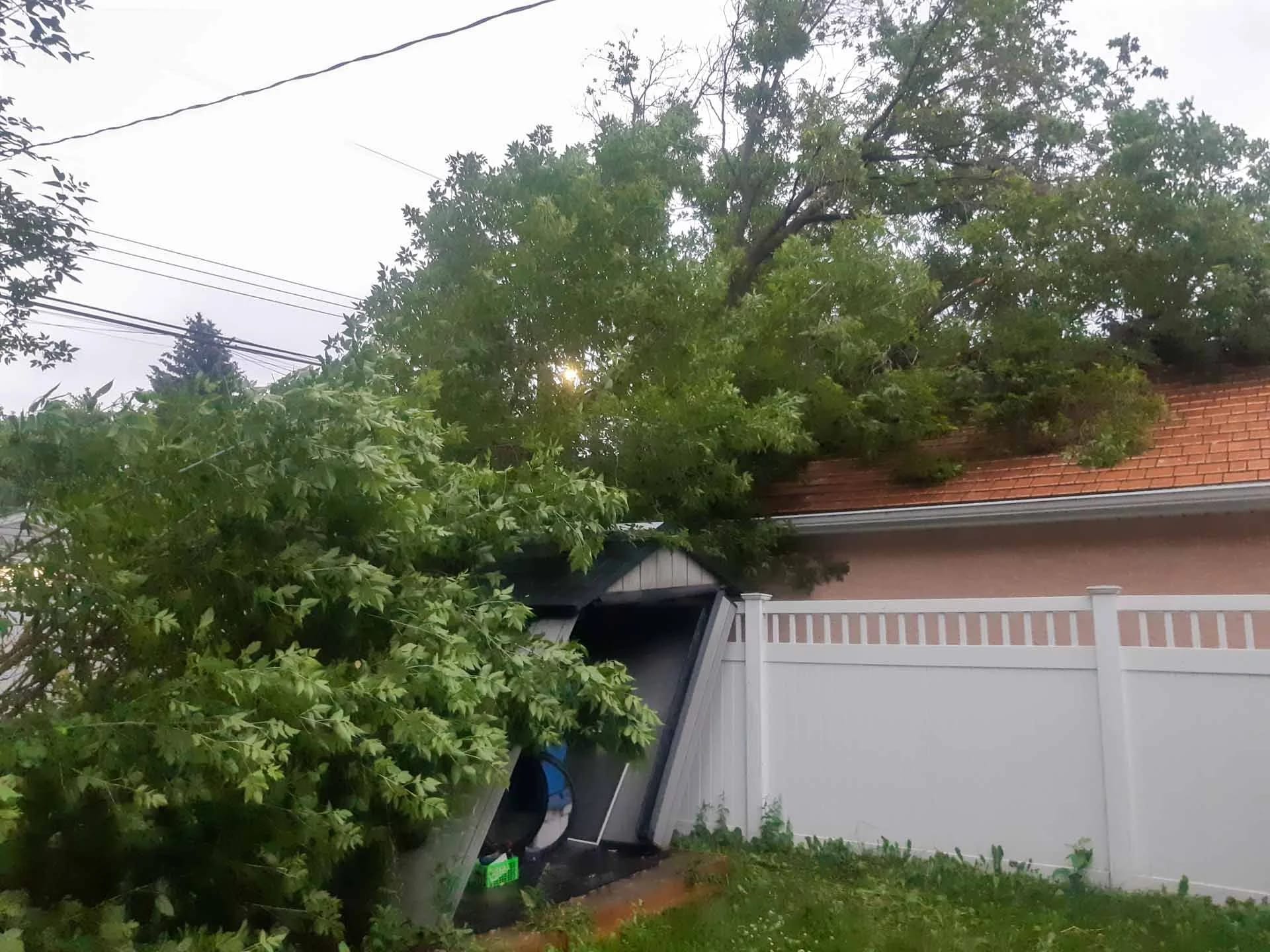
Tree removal is considered a last resort, but it may be required when:
- The tree poses an unacceptable risk to people, homes, or utilities
- The tree is dead or in irreversible decline
- Structural failure is likely or already occurring
- Storm damage has compromised stability
- There is an infectious disease present and removal is required to limit spread (for example, Dutch elm disease or black knot — see our elm disease blog post)
In these cases, professional removal protects safety while minimizing impact to surrounding trees and landscapes. It's also important to understand that not all visible damage carries the same level of risk. Some cracks are more serious than others: certain tree species in Edmonton commonly develop frost cracks, which appear as long vertical splits in the stem. While these can look alarming, they often have little impact on the tree's structural stability. In contrast, horizontal cracks or cracks that run through a major stem or union can indicate a high risk of failure and should be assessed promptly by a certified arborist.
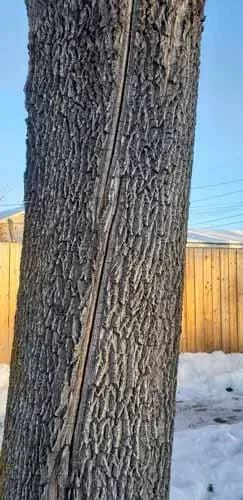
The above shows a frost crack (vertical along the stem) in a green ash - frost cracks don't seriously affect the structural stability of trees
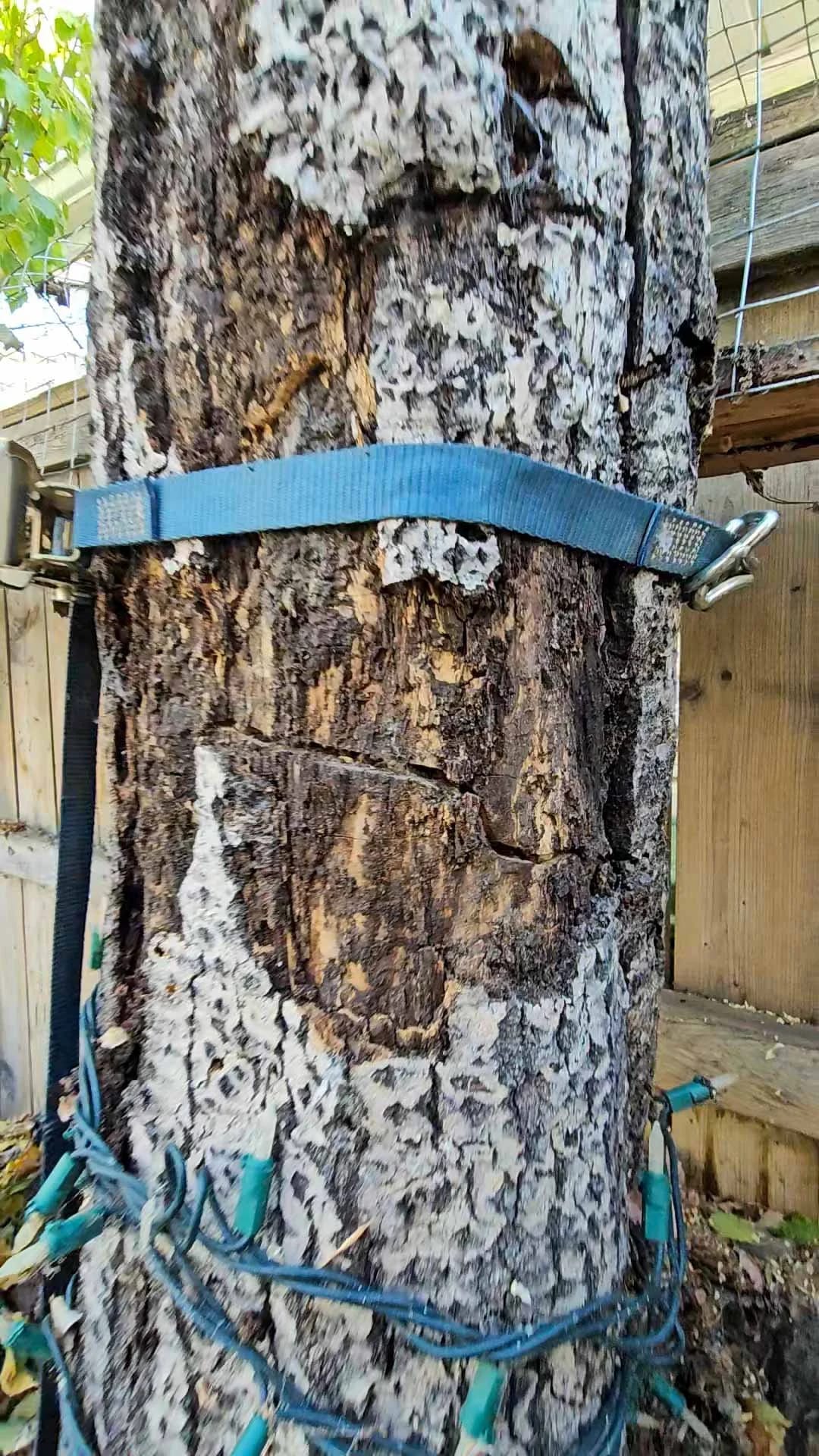
The above shows a horizontal crack. This crack was opening and closing as the tree moved with the breeze. This tree required immediate removal.
Safety-First Removal Methods (Including Crane-Assisted Removals)
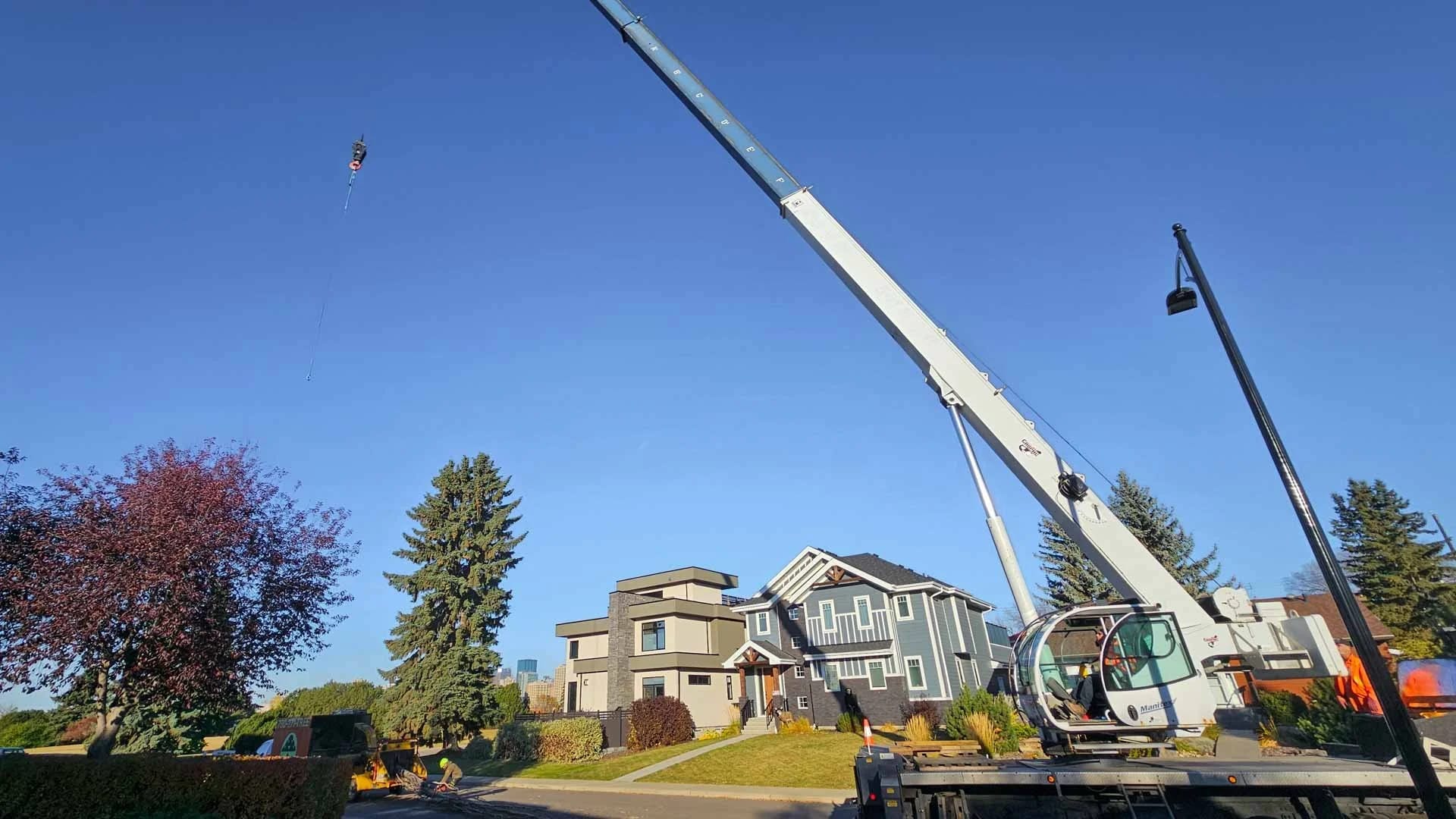
In some situations, removing a tree safely requires more than traditional climbing and rigging. When trees are large, structurally compromised, or located close to homes, power lines, or other infrastructure, crane-assisted removal can be the safest and least disruptive option.
Using a crane allows arborists to:
- Remove large sections of a tree in a controlled manner
- Reduce risk to nearby buildings, landscaping, and utilities
- Minimize time on site and overall disturbance
- Improve safety for crews and homeowners alike
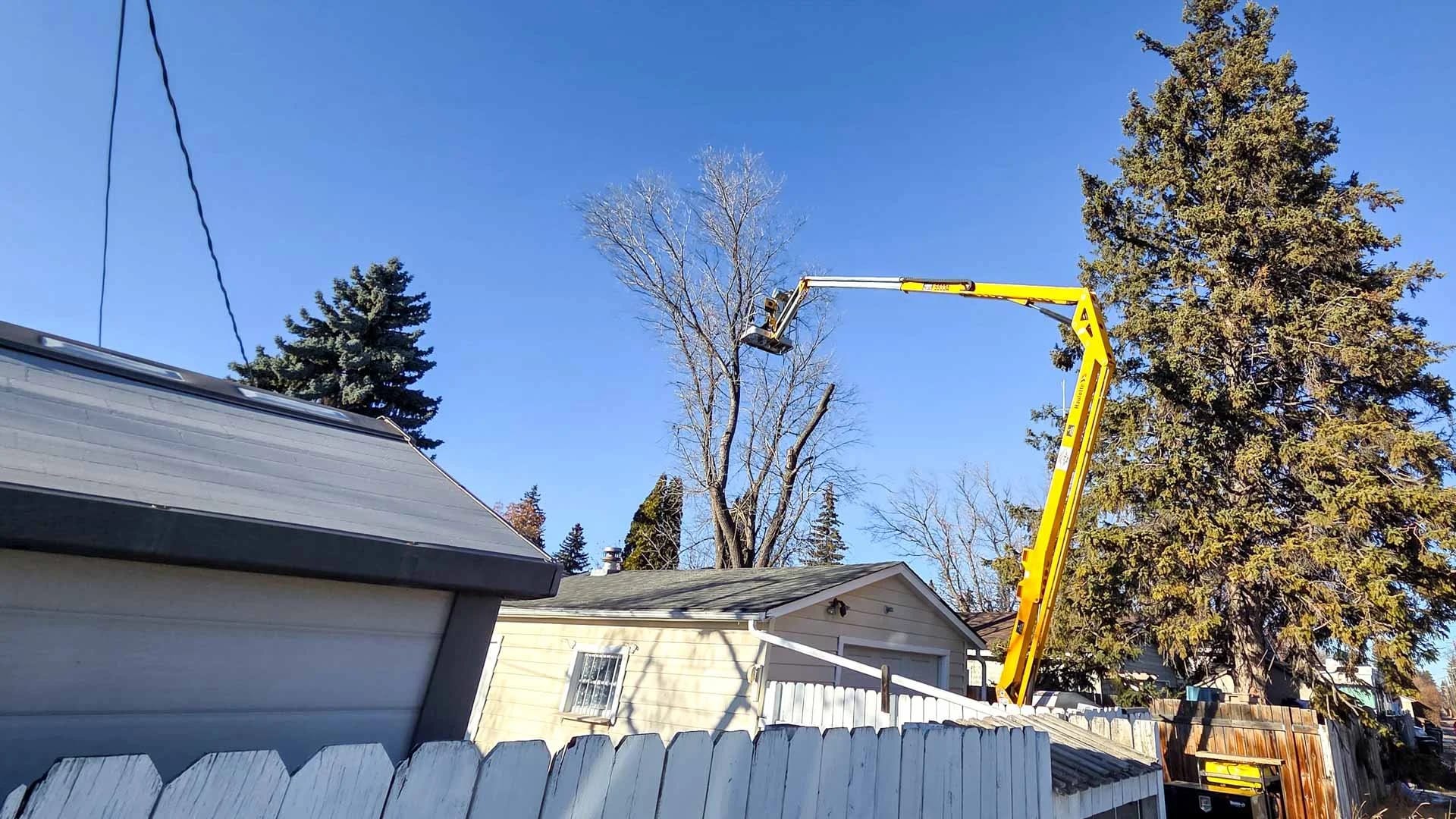
Crane use is not the default approach — it's a strategic decision made when site conditions demand it. A professional assessment helps determine whether crane-assisted removal is the safest solution for your property.
Why a Professional** Tree Health Assessment **Matters
Visual signs alone don't tell the full story. Certified arborists — particularly those qualified as Tree Risk Assessors — are trained to evaluate:
- Tree structure
- Presence and significance of disease
- Internal decay
- Root stability
- Species-specific risk factors
- Site conditions and soil health
- Likelihood of failure over time
This allows homeowners to make informed decisions — not rushed ones based on fear.
Edmonton-Specific Considerations
Edmonton's climate, soil conditions, and tree species present unique challenges:
- Freeze-thaw cycles can worsen structural weaknesses
- Clay soils increase root stress and instability
- Certain species are more vulnerable to disease or breakage
Local expertise matters when evaluating whether removal or preservation is the right call.
Not sure if your tree is dangerous or salvageable?
A professional assessment can give you clarity and peace of mind.
📞 Call: 780 271 8733
📧 Email: info@citytree.ca